Benjamin Franklin Quotes
Necessity never made a good bargain.
Benjamin Franklin, 1706-1790, Member of the Continental Congress & the Constitutional Convention, Governor of Pennsylvania, President of the Pennsylvania Assembly, U.S. Minister to France, Postmaster General of the American Colonies, Poor Richard's Almanack, 1735
Sourced by: Eigen's Political and Historical Quotations


Referring to President Lyndon B. Johnson


1st Earl Lloyd-George of Dwyfor

Whithead’s view which seems intuitively right to most citizens, tends to be the one that the majority espouses but the minority opposes. At the time, the Republicans controlled the White House and there were a number of polarizing issues, where the Republicans could not obtain consensus and then decided. However, then the Democrats gained control of the White House and Congress the next year, it was the Democrats who claimed that they had to decide. The Republicans, now in the majority, argued that significant changes in America should not be made by narrow majorities and major issues should be tabled if there was no substantial majority. That was the position that the Democrats had espoused when they were in the minority.


This was an indirect criticism of Condoleezza Rice, the National Security Advisor to George W, Bush for not taking a role that Mazarr and many others believe she should have. On the other hand, President Bush selected her precisely because she shared his values and instincts. Perhaps, Bush should have selected and advisor who held a DIFFERENT view and perspective from himself. This quotation reveals the classic dilemma of political appointments of key advisors and cabinet members. Bush and Ronald Reagan tended to select advisors who agreed with them in philosophy and politics. FDR and Obama, followed the Lincoln tradition and appointed many advisors who were not intellectual clones of their own views and values.

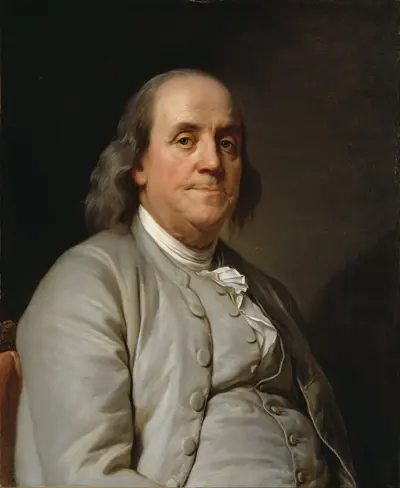
Benjamin Franklin FRS FRSA FRSE was one of the Founding Fathers of the United States. A polymath, he was a leading writer, printer, political philosopher, politician, Freemason, postmaster, scientist, inventor, humorist, civic activist, statesman, and diplomat. As a scientist, he was a major figure in the American Enlightenment and the history of physics for his discoveries and theories regarding electricity. As an inventor, he is known for the lightning rod, bifocals, and the Franklin stove, among other inventions. He founded many civic organizations, including the Library Company, Philadelphia's first fire department, and the University of Pennsylvania.
