Charles V, Holy Roman Emperor Quotes
Name me an emperor who was ever struck by a cannonball.
Charles V, 1500-1558, King of Spain and Holy Roman Emperor, Remark made to his officers just before a battle, April 23, 1547
Sourced by: Eigen's Political and Historical Quotations

After the King’s appointment in 1921 she “advised” him on establishing this regime and operating the government. At a time that women could not even vote in England, Bell was a kingmaker and major power in an area of the world that was much more sexist than England at the time.


This phrase was used on all royal decrees and it accurately reflected the Bourbons “divine right” to rule


Drake named the land Nova Albion.


McClellan thought President Lincoln an oaf and toyed with the idea of taking over. Ironically, he was a terrible battle general and never would have any reasonable success on the battlefield.

Cromwell was not opposed to monarchy per se as long as it was reasonably checked. He saw Charles II as a terrible monarch. After deposing Charles, he and his associates had to come up with some form of government. As “Lord Protector” he was a de facto monarch without the trappings.


England had, under Henry VIII, left the Roman Catholic Church where the King replaced the Pope as head of the English Church. Henry’s successors then had to organize and manage the national Christian church. James was discussing the hierarchy of the Church of England and there was a suggestion that Bishops be eliminated and have every priest directly responsible to the crown. Bishops would be powerful figures who might form a power center. (They did later). However, King James I observed that the King is God’s choice and rules by divine right. So there had to be bishops to crown kings. The bishoprics were retained.


Cochrane became the Admiral in Chief of 2 Different South American Nations—Peru and Brazil—fighting for their independence. Incredibly enough, he was able to form idealistic freedom fighters with no naval experience into navies which defeated both the Spanish and Portuguese fleets at a time when those countries had world class navies. His achievements on behalf of the South Americans are often regarded as the most remarkable naval achievements in history.

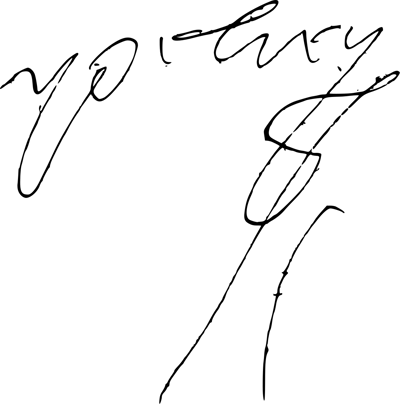
Charles V (Spanish: Carlos; French: Charles; German: Karl; Dutch: Karel; Italian: Carlo) was ruler of both the Spanish Empire from 1516 and the Holy Roman Empire from 1519, as well as of the Habsburg Netherlands from 1506. He voluntarily stepped down from these and other positions by a series of abdications between 1554 and 1556. Through inheritance, he brought together under his rule extensive territories in western, central, and southern Europe, and the Spanish colonies in the Americas and Asia. As a result, his domains spanned nearly four million square kilometers and were the first to be described as "the empire on which the sun never sets.”
