Simon Flexner Quotes
My success in transplanting arteries between animals has pioneered surgical techniques that being closer the day when hearts and other organs will be transplanted into humans. No effort should be spared to reach this goal.
He had just published a paper for the American Association for the Advancement of Science reporting on his development of techniques to transplant arteries from one animal to another. This was the beginning of transplantation. However, immediately he envisioned the possibility of transplanting all organs in humans including the heart. It would take half a century for Dr. Christian Barnard to actually transplant a heart, but the idea was not novel. It had been a goal since Flexner made this quotation.
Simon Flexner, 1863–1946, Physician & Scientist, Director of the Rockefeller Institute for Medical Research, Statement, January 1, 1908
Sourced by: Eigen's Political and Historical Quotations


This quotation became the mantra of the MIT Media Lab's Professor Hugh Herr and others whose total efforts are spend inventing things for the future.


He was observing that from a public policy point of view, it is very difficult to target research funds on projects that will have practical innovations because so many come from basic research or research in an entirely different field of science.


This is why the American Government has played such a major role in most of the great technologies in American History. Interchangable Parts (A federal contract with Eli Whitney), Canal Construction (New York State built the Erie Canal), the Railroad (federal government gave hugh tracts of land to build the rail lines to the West), the Telegraph (No one would use it until the government financed the experiment to prove it by creating a line between Baltimore and Washington), AC Electricity, there the city of Rochester NY hired Tessler and Westinghouse to Demonstrate Generating Electricity at Niagra Falls and transmitting it over 20 miles which Edison’s Direct Current could not do), immunization (the Army Medical Corps gave the first grants to universities to develop the science of vaccines and immunization, the computer (in WWII the U. S. financed the development of computers sent to England to implement Turing’s breaking of the German “unbreakable” code), atiomic energy (the Manhattan Project—the largest scientific endeavor the world has known), the Internet (Developed with long term research funds for DARPA the future technology research arm of the Defense Department. American investors and businesspeople took each of these and developed them but the initial steps, when no capitalist dared risk on such basic and futureistic efforts were taken by American Government which probably could never have developed these technologies but the private sector could not do it with government in the role Moritz herein describes.

Most of the biological scientists and research physicians had good reason to believe that Fetal Stem Cell research could have large payoff in terms of regenerating organs and other therapies. However, there was a very passionate minority who wanted it made illegal to do research with fetal stem cells. They argued that if the research was very successful, and fetal stem cells could be used to grow new healthy organs, abortions to “harvest” the fetal stem cells would increase. There were other fundamentalists who opposed doing any kind of research in creating life or organs. Only God may create life they argue. Specter, although aa Republican whose party mostly opposed Stem Cell Research did not believe that the religious views of some Americans shuld revent others from longer life and the benfit of medical research. However, conservatives of his party remembered and ousted him aat the Primary Election even though as a Republican he could easily win the state election of ll the citizens.


He was one of the team that created the first Atomic Bomb. In 1946, the atomic bomb was known about by almost all Americans and almost no one had even heard of a computer or the concept of a computer. The British and Americans during the war had collaborated to build very limited electronic calculating machines but the concept of programs to control the calculating machines was new—initially created by van Neumann and Englishman Alan Turing. When he made this statement most people thought it was the ravings of a “mad scientist. He was one of the team that later developed the first real computer at the Institute for Advanced Study at Princeton.”


Most environmentalists limit the vision of their solutions to using less of our precious natural resources which is very important but just as important and perhaps more so in the long run is increasing the supply of these resources. Food is an example. The major reason that there is no serious food shortage world-wide is that we have increased the productivity of agriculture requiring less labor, less water, less fertilizer, less land, and less dependency on weather. Distribution has also improved, but there is no very good way of distributing something for which there is a great shortage.

The “gap” is different in different fields. Public health has a particularly large gap while laser app;ications have a much smaller one.
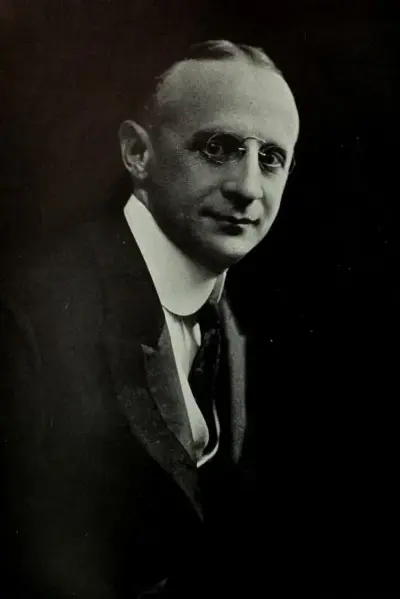
Simon Flexner, M.D. ForMemRS was a physician, scientist, administrator, and professor of experimental pathology at the University of Pennsylvania (1899–1903). He served as the first director of the Rockefeller Institute for Medical Research (1901–1935) (later developed as Rockefeller University) and a trustee of the Rockefeller Foundation. He was also a friend and adviser to John D. Rockefeller Jr..
