Soren Kierkegaard Quotes
My standpoint is armed neutrality.
Kierkegaard, Søren. The Point of View. Edited and translated by Howard V. Hong and Edna H. Hong, Princeton University Press, 1998, p. 129.


Inscribed in the John Adams Building of the Library of Congress. On this subject Jefferson was in agreement with George Washington {37176} and his political opponent, John Adams {592705}.

Factions were political parties.


George W. Bush. Reference to foreign policy situations like Syria where there is a major conflict or contest between two forces, each of which is fatally flawed from an American point of view.


Lodge was particularly concerned that under the proposed treaty the United States would be obligated to support the League of Nations military efforts regardless of American public opinion or Congressional action.

The elder Kennedy was an admirer of Hitler and Fascism and was convinced that democracy was finished in England. As the U. S. Ambassador to England, his views—see also {610124} and {610122}—destroyed his own political career in the United States, and he thereafter kept a low profile and maintained his political aspirations through his children.


At that time there were extensive meetings and discussions for the creation of what was to be the United Nations. The negative view of the United Nations or other international security organization is now and always has been held by a vocal minority in the United States.
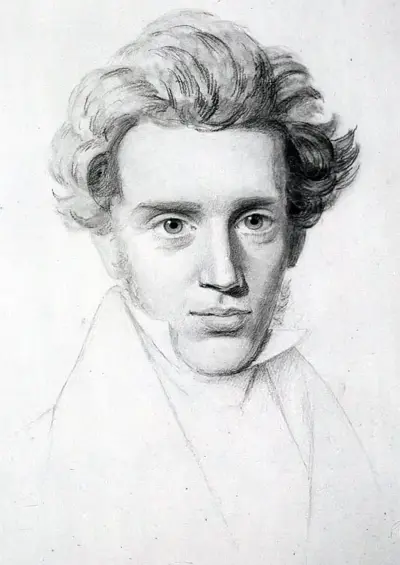
Søren Aabye Kierkegaard was a Danish philosopher, theologian, poet, social critic, and religious author who is widely considered to be the first existentialist philosopher. He wrote critical texts on organized religion, Christendom, morality, ethics, psychology, and the philosophy of religion, displaying a fondness for metaphor, irony, and parables. Much of his philosophical work deals with the issues of how one lives as a "single individual", giving priority to concrete human reality over abstract thinking and highlighting the importance of personal choice and commitment. He was against literary critics who defined idealist intellectuals and philosophers of his time, and thought that Swedenborg, Hegel, Fichte, Schelling, Schlegel, and Hans Christian Andersen were all "understood" far too quickly by "scholars".
