Frances Arnold Quotes
My laboratory uses evolution to design new enzymes. No one really knows how to design them - they are tremendously complicated. But we are learning how to use evolution to make new ones, just as nature does.
Arnold, Frances H. "Nobel Lecture: Innovation by Evolution, Bringing New Chemistry to Life." NobelPrize.org, Nobel Media AB, 8 Dec. 2018.

He and others have already done it. Joyce's lab at the Scripps Research Institute was the first to produce a self-replicating in vitro system, capable of exponential growth and continuing evolution, composed entirely of RNA enzymes. Most politicians do not understand much about evolution and many actually believe that evolution has not been proven an is not what governs the development of species. And at some point these men and women will have to come to grips with this scientific reality and decide what if any restrictions there should be on the human control and manipulation of the evolution of different species.


40 years later, it was clear that he was correct about the possibility of man directing his own evolutionary future. It was also clear that man was doing just that by his effect on his own ecosphere and other humans. However Beadle envisioned an intentional planned set of actions, taken by society as a whole. However, in most counties the political system has not been very facile at examining the alternatives with the advice of scientists. In the United States about half of the politicians reject the information provided by the overwhelming majority of the scientists, and the great challenge was whether in the future man will knowingly and with forethought affect his evolution or with ignorance and unintended consequence will do so.
Actually, while such selective breeding is possible in all animals, the selection for a single trait almost always produces other unintended and unanticipated traits and these could be devastating to the “new generation”, unpleasant, benign, or anything else. At the time selective breeding was the only possible tool to produce “desirable” traits in an animal or to eliminate what someone things of as “undesirable” traits. Today, our understanding of the human genome and genetic engineering offers a much more reliable possibility of affecting animal traits without as many risks of random and unintended consequences that are present with breeding.
The Eugenics Movement, which grew quite popular for a while, tried to improve the race of man, not by improving individual people or even a generation of people, but of selective and restrictive breeding of humans. The coercion and bias associated with it caused one of the worst violations of human rights in American History, and then was picked up by Adolf Hitler who carried the ideas to one of the worst atrocities in human history—the murder of “inferior races” so that they could not breed, thereby in their warped theory developing a super race.


What he thought was conceivable in the 1970’s seemed almost certain to come to pass 30 years later. Scientists had already altered the evolution of various plants and animals, and the complete human genome had been sequenced. The question will be not whether man will be able to control and modify his own evolution, but how should this be done and who should decide it. We have realized that man has already—unintentionally—altered the evolution of many species from passenger pigeons which are now extinct and the dog which coevolved with humans. Arguably, man’s development of the ability to control his own evolution is an evolutionary development itself. One great question for society is whether it is better to alter evolution unknowingly or in a planned, relatively controlled manner. For man to participate in the design of human evolution will be the nightmare of the Creationists who insist that evolution is too complicated to be somewhat of a random process and that there must be a designer who they assume is God. When man becomes the designer, that will be very disturbing. For most theologians, there will be little difficulty with the notion that God chose the mechanism of evolution and chose humans to give the intellect and knowledge to implement and design the evolutionary process.


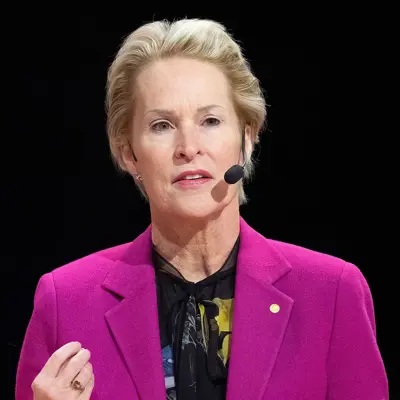
Frances Hamilton Arnold is an American chemical engineer and Nobel Laureate. She is the Linus Pauling Professor of Chemical Engineering, Bioengineering and Biochemistry at the California Institute of Technology (Caltech). In 2018, she was awarded the Nobel Prize in Chemistry for pioneering the use of directed evolution to engineer enzymes. Frances Arnold is a director of Alphabet Inc. since December 2019.
