Lady Gregory Quotes
My husband was in the war of the Crimea. It is terrible the hardships he went through, to be two months without going into a house, under the snow in trenches. And no food to get, maybe a biscuit in the day. And there was enough food there, he said, to feed all Ireland; but bad management, they could not get it.
Lady Gregory. The Kiltartan History Book. Maunsel & Co., 1909, p. 49.


The president was right. There is enough food to go around. The problem however is logistical, economic, and political. Some countries use food as a weapon to keep their own people under control. The major problem is the distribution of the food. It has to be transported from where it is gown to where it should be consumed. Much food in the third world rots because the transportation system cannot move the food efficiently enough. Even when food is donated to nations, the free or cheap food undercuts the local farmers who go out of business and there is even less food the following year.


Often referred to as “Father of the Green Revolution” for his contributions to food growing throughout the world


Vladimir Lenin. Uyezds were small towns and cities in an administrative subdivision of Russia. For Americans, hoarding has been a reprehensive policy for greed and personal gain, where the consequence for most people was inconvenience and loss of money. But in Russia hundreds of thousands of people starved to death while hoarders of food wanted to hold out for higher prices. To Lenin and many others, hoarding was mass murder and that was exactly its effect.

The Murrain was phytophthora infestans a highly contagious fungus that attacked the strain of potatoes planted in Ireland at the time. The worst thing about the blight was that the Irish poor had developed such a narrow diet that the potato was virtually their only food. See {639195} and {639196}.


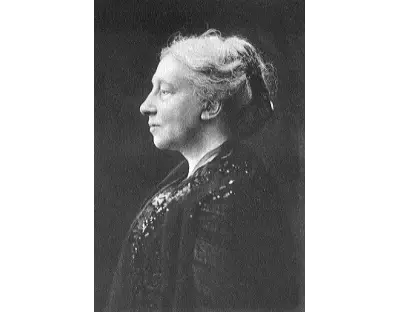
Isabella Augusta, Lady Gregory was an Irish dramatist, folklorist and theatre manager. With William Butler Yeats and Edward Martyn, she co-founded the Irish Literary Theatre and the Abbey Theatre, and wrote numerous short works for both companies. Lady Gregory produced a number of books of retellings of stories taken from Irish mythology. Born into a class that identified closely with British rule, she turned against it. Her conversion to cultural nationalism, as evidenced by her writings, was emblematic of many of the political struggles to occur in Ireland during her lifetime.
