Luke Harding Quotes
My four years in Russia end, then, in dramatic fashion: with a textbook Soviet-style expulsion. I am the first western staff correspondent to suffer this fate since the end of the Cold War. I'm stunned. But my expulsion is not, I reflect, a surprise. It's something I have always accepted as a real, if far-fetched, possibility.
Harding, Luke. Mafia State: How One Reporter Became an Enemy of the Brutal New Russia. Guardian Books, 2011.

Actually the United States has a long history in interfering with foreign elections throughtout Latin American Countries, Europe, Asia,, and Africa. Russia also has been trying to tilt elections recently in Eastern Europe and befroe the COld War the International Communist Party was involved trying to swing elections since shortly after the Russin Revolution. Before that the Czars agents were involved in many foreign elections. But the United States and Russia historically are relative newcomers and rank amateurs in interering with foireign elections when compared with Germany and France and the Champion--Great Britain who controlled much of the world and very often promoting democratic values like elections throughtout the world and then workign to manipulate those elections. Japan and Chine did much less of this historically. Instead they just conquored other counties and placed their puppets in charge. What was new in teh 2016 Russian interference in the American Election was the fact that it was done by hacking computers. Putin had accused Hillary Clinton of Interfering with the Russian election when he last ran for President by funing Russian organziations that oppo
This fact was one of the reasons that McCarthyism and HUAC were able to get traction. The Red Scare paranoids found something to really worry about. They overreacted, sensing the problem not as one of a large number of misguided and naïve people trying to help America do better, but as active spies controlled by the Kremlin who wanted to destroy the American way of life. There were two basic reasons these naïve officials acted that way. Many of them had not forgotten the devastation of the American people in the Great Depression and believed that capitalism had almost failed completely and the rough edge had to be taken off American capitalism by injecting some socialist principles such as stronger labor unions, ending racial and religious discrimination, controlling monopolies, and regulating critical industries. They also were mindful of the fact that the Russians were bearing the brunt of the WWII casualties—military and civilian—while killing more of the Germans and capturing more German occupied territory than the other allies together, yet they were not receiving the same level of assistance—technical, intelligence, economic and political as the British. They saw helping the Russians as saving American lives on the battlefield by making them more effective and keeping German soldiers and weapons away from the Western front and Americans. They also remembered that many in Congress were opposed to our entering WWII in Europe until Germany declared war on America. They had in many cases been apologists for Fascism and passionate enemies of communism. Some American industrialists like Henry Ford were anti-Semitic and overt admirers of Hitler. {586985} So these officials tried to redress the imbalance that existed while at the same time little was really known about Soviet Russia and the Stalin excesses that were as bad as some of Hitler’s. {634969} The only information Americans had were the terrible casualties the Russians were taking and the in kind that they were dishing out to the Germans. The number of Soviet spies in America were few and commensurate with the number of agents we had in Russia. But few Americans realized the difficulty the U. S. and the rest of the democratic world would have with Russia after the war was won.

During the Cold War and afterwards many Americans attributed the problems we were having with the Soviet Union emenated from the fact that they were Communists, and our focus was anti-communism. Kennen, however argued that it was not Communism that was the cause of the Aggression of the Soviet Union. It was an extension of the Russian Culture. After the Soviet Union collapsed, and Communism was rejected by the Russians, we still had a great deal of Russian aggression and Foreign Policy problems with Russia. Kennan was right. It was the Russian culture, history, values and traditions that were the primary cause of most of the problems with Russia.


McNamara stated that the Cuban Missile Crisis was more politically required than defense required. The Russians had nuclear missiles at the time that could reach the United States and didn’t really need missiles in Cuba to threaten America. Public opinion and the Republican Political doctrine persuaded President Kennedy that independent of safety and military factors, nuclear missiles in Cuba was a major political problem. See his comment to the President and the Other Officials dealing with the crises—{631968}.


at the end of World War I 1st Earl Lloyd-George of Dwyfor

At the end of WWII there was much tension between Russia and the Anglo-American alliance. This plan was developed but never implemented. See {613195} for Prime Minister Winston Churchill’s description of the invasion idea.

Ironically, at the time she wrote this column, Mrs. Roosevelt was being accused of being a communist by some Southerners who associated her strong views against racism and segregation. Some in the North thought she was a communist because of her active role in the New Deal, Yet here she was, willing to use military force to prevent Soviet expansion.


Misha Saakashvili, the President of Georgia, the ex-Soviet State, had a good bit of support in American political circles and decided to start a military conflict with Russia attacking a disputed area whose people had rejected Georgia and preferred the Russian affiliation and control. He was confident that the US would protect him from major retaliation. The Russians first moved troops into the attacked area and then started attacking Georgia military assets. Rice and the Russian Foreign minister were negotiating a cease fire on which they agreed to details and were going to impose them on Georgia. However, Lavrov demanded that Georgia President Saakashvili be deposed. Either nation had the power to do this, and both had in many past instances deposed or overthrown the leaders of other nations—democratically elected or not. This quote is very interesting because in this particular case the United States was stating its idealistic policy and not its “real-politic: that it exhibited in helping to bring down and depose democratically elected in Iran, Chile, Vietnam, Venezuela, Haiti, and others. Ironically, there were many in the US who wanted Saakashvili deposed for unilaterally starting a military conflict Russia that had to involve the U. S.
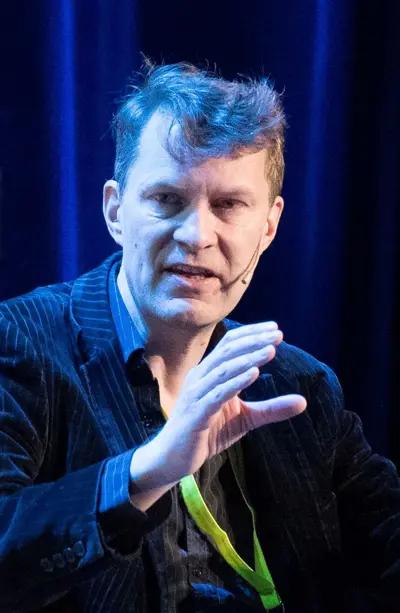
Luke Daniel Harding is a British journalist who is a foreign correspondent for The Guardian. He was based in Russia for The Guardian from 2007 until, returning from a stay in the UK on 5 February 2011, he was refused re-entry to Russia and deported the same day. The Guardian said his expulsion was linked with his critical articles on Russia, a claim denied by the Russian government. After the reversal of the decision on 9 February and the granting of a short-term visa, Harding chose not to seek a further visa extension. His 2011 book Mafia State discusses his experience in Russia and the political system under Vladimir Putin, which he describes as a mafia state.
