Stephanie Cutter Quotes
My brother got a .22 for his 12th birthday; I got a .22. He got a hunting knife; I got a hunting knife.
Cutter, Stephanie. Quoted in "For the Obama Campaign, a Forceful and Pervasive Voice" by Ashley Parker. The New York Times, The New York Times Company, 7 May 2012.


She advocated armed self-defense for Blacks.


At the time, English ordinary citizens were not allowed to have firearms, but exception was made for the colonists. “Stands” were y-shaped sticks that the gun would rest on as the weight was about 20 pounds.

Even allowing for a certain amount of exaggeration, it is clear that there were many Americans who were personally armed in this period.

This historical quotation gives us an interesting picture or Secret Service practices and First Family Security in 1937. Unlike all the first ladies before her and most after her, she was a very active political figure and regularly received threats. Yet she not only drove alone on occasions, but published that fact to the world in this column. Also, although an extreme liberal, she had little trouble carrying a gun and learning to use it. Her father and her Uncle Theodore Roosevelt both were very comfortable with guns. What is surprising is that the Secret Service did not provide more protection for her. At that time gun ownership had not yet become a political issue, and Mrs. Roosevelt, a committed liberal, thought nothing of “packing heat” at a personal level.

Gunsmiths were few in early America and a skilled gunsmith could only make about 3 per month. As a result guns in early America were a luxury and few Americans orned them. This is contrary to the myth that the early Americans were all gun owners and sharpshooters.


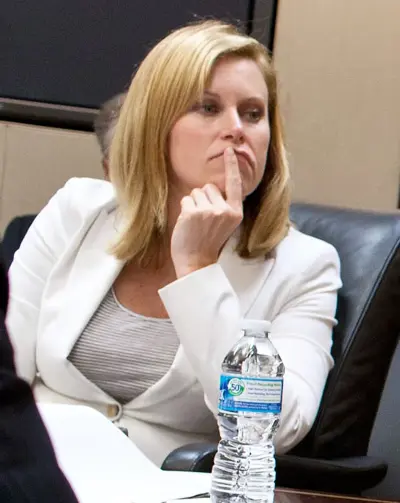
Stephanie Cutter is an American political consultant. She served as an advisor to President Barack Obama during his first presidential term, and was deputy campaign manager for his 2012 re-election campaign. She previously worked in campaign and communications roles for other prominent Democrats including Ted Kennedy, John Kerry, and Michelle Obama. The New York Times described her as "a popular but polarizing face of (Obama's) campaign", and a "soldier who says the things the candidate can’t (or won’t) say."
