Mona Eltahawy Quotes
My birth at the end of July 1967 makes me a child of the naksa, or setback, as the Arab defeat during the June 1967 war with Israel is euphemistically known in Arabic.
Eltahawy, Mona. Headscarves and Hymens: Why the Middle East Needs a Sexual Revolution. Farrar, Straus and Giroux, 2015.

”Palestine” to the Arabs of the area meant the territory of the West Bank, Gaza, and Israel itself. They wanted to expel the Jews and or take over the whole area as a single state—Palestine—with an Arab majority. With the Israeli Defense Forces successes under Dayan, this notion of Palestine was “finished”. The notion of a Palestinian State which included the West Bank and Gaza but not Israel was then negotiated and these negotiations were ongoing for years. Minorities of Arabs and Israelis did not want to see a any Palestinian state that did not include Israel proper, and they blocked it whenever they could.

When the United Nations partitioned Palestine into a Jewish and a Palestinian State the Arab Countries all jointly attacked the fledgling Jewish State of Israel. Despite the Israeli’s being overwhelmingly out numbered in man and weapons, they beat back the invaders. However while many Arabs stayed on their Israeli land and some helped the Jews defend against the Arab Armies some abandoned their homes and land and went to neighboring Arab Counties. This is what they had been asked to do by the Arab governments who wanted to be able to attack communities without worrying about killing Arabs. To spur the evacuation the spread false propaganda about Israeli atrocities and frightened them into leaving. As a motivation to leave they were told that they could move into the Jewish lands and property when the Jews had been driven out. To make matters worse, some Israeli radicals repeated the lies to induce the Arabs to abandon their lands. In at least one case Arabs who stayed were subjected to violence. After the defeat of the Arabs, the Israelis had a dilemma in that they could not tell which Arabs were residents who had just been frightened and which had fought on the Arab side or helped the invaders. The result was that with few exceptions, the Arab refugees were not allowed back. Meanwhile, the Arab countries would not allow the refugees to settle and become citizens of the Arab countries (except for Jordan). The Palestinian refugees were a particularly fertile population and were cared for by the United Nations and have multiplied to many times their original size maintaining a continuous festering problem.


A major issue amongst Israeli’s is to how they should relate to those hostile Islamic nations in their area who claim they are at war with Israel or the Jewish People. This position in effect says that the oratory of those Islamic groups that claim that they are in a war—a holy war even—should be taken at their word and treated as a wartime enemy and Israel should actively attempt to kill and destroy them.
Most Arabs blamed only the partition of Palestine and the creation of Israel and ignored what they did or did not do since 1949.

The very day of Israel’s birth, 14 Arab Armies attacked a badly outnumbered group of citizens with no formal army and few weapons. The reason the Mufti called on Arabs to leave was to allow the Arab heavy armor and artillery to be used without endangering Arab civilians. The Jews however had no place to go and were fighting for their very lives. Surprising the entire world, they not only beat back all the Arab Armies but won additional strategic positions. The Arabs who stayed became Israeli citizens and there are almost ½ million of them today. Those that left, were rejected by the Arab nations who started the war (except Jordan) and asked them to leave could not be distinguished from those Arabs who, even after the Israeli victory vowed to attack again. That is the origin of the Arab refugees. Since the other Arab states except Jordan would not assist their fellow Arabs, the only solution seems to be a Palestinian State on the West Bank and Gaza, but for that to happen war and terrorism would have to end and Israel would have to be accepted.


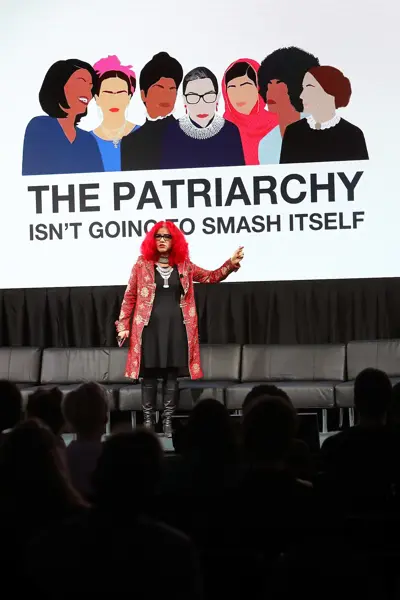
Mona Eltahawy is a freelance Egyptian-American journalist and social commentator based in New York City. She has written essays and op-eds for publications worldwide on Egypt and the Islamic world, including women's issues and Muslim political and social affairs. Her work has appeared in The Washington Post, The New York Times, Christian Science Monitor, and the Miami Herald among others. Headscarves and Hymens, Eltahawy's first book, was published in May 2015. Eltahawy has also been a guest analyst on U.S. radio and television news shows. She is also acknowledged as one of the people who spearheaded the Mosque Me Too movement through the usage of the hashtag #MosqueMeToo.
