Geoffrey Chaucer Quotes
Murder will out, this my conclusion.
Chaucer, Geoffrey. The Canterbury Tales. Translated by Nevill Coghill, Penguin Books, 2003, p. 242.

Often quoted by historians and victims of state murders and wartime atrocities.


His comment was particularly critical since he had been an early supporter of the military takeover of the government. See {595250}.


This proverb only makes sense in the light of understanding the Arab concept of revenge—“blood.” In a rural desert environment where little can be expected of government, the Arabs have developed a law enforcement and peace keeping mechanism which while primitive from modern standards, nevertheless worked to some degree. It is that revenge—“blood” is a moral necessity and obligation of all people, and revenge is not limited by time or to the individuals involved in the first incidence. The immediate family are the first to exact revenge, but the extended family follows and often the entire clan. Sometimes revenge is tribal or even national. Anyone who fails to revenge a member in his group is not only a disgrace, but is a clear and present danger to the group because then they can be attacked with impunity. So revenge is a strong obligation of the group members and blood must be paid with blood no matter how many generations it may take. The only thing that keeps me and my family safe, is the surety what whosoever kills one of us will themselves be killed or if they die a natural death we will take revenge on one of the evildoers relatives and no one is exempt. Crime must never pay!


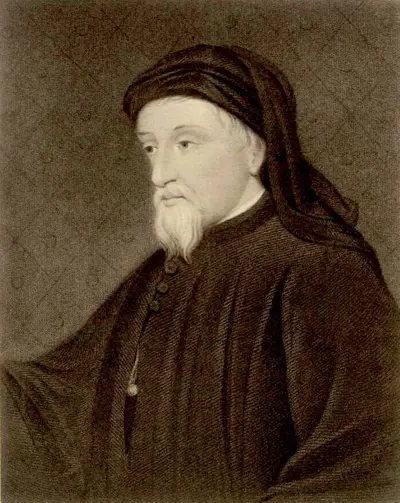
Geoffrey Chaucer was an English poet and author. Widely considered the greatest English poet of the Middle Ages, he is best known for The Canterbury Tales. He has been called the "father of English literature", or, alternatively, the "father of English poetry". He was the first writer to be buried in what has since come to be called Poets' Corner, in Westminster Abbey. Chaucer also gained fame as a philosopher and astronomer, composing the scientific A Treatise on the Astrolabe for his 10-year-old son Lewis. He maintained a career in the civil service as a bureaucrat, courtier, diplomat, and member of parliament.
