Jorge Luis Borges Quotes
If crimes have been committed it is necessary to investigate. They say that the number of victims have been exaggerated, but one case is enough. Cain slew Abel only once. Christ only once was crucified.
His comment was particularly critical since he had been an early supporter of the military takeover of the government. See {595250}.
Jorge Luis Borges, 1899-1986, Argentinean Poet and Novelist, Comment on the Dirty War in Argentina where the military murdered and tortured tens of thousands of civilians, 1978
Sourced by: Eigen's Political and Historical Quotations

Based on this statement, the coup came to be called “The Gentlemen’s Coup.”


John Brown, in a futile effort to start a slave insurrection, raided the arsenal at Harper’s Ferry. His raid failed and he was captured and hanged. However, he became a martyr to the abolitionist movement, and his death is still sung of gloriously to this day. See {584889} and {604003}.

In contemporary American terms this notion is usually couched in terms of all consumers paying higher prices because of credit card frauds, or all airline travelers must submit to searches because of the terrorists.


He was finally brought to justice after being protected by the right wing for many years. He was sentenced to 25 years in prison. See related quote.


This proverb only makes sense in the light of understanding the Arab concept of revenge—“blood.” In a rural desert environment where little can be expected of government, the Arabs have developed a law enforcement and peace keeping mechanism which while primitive from modern standards, nevertheless worked to some degree. It is that revenge—“blood” is a moral necessity and obligation of all people, and revenge is not limited by time or to the individuals involved in the first incidence. The immediate family are the first to extract revenge, but the extended family follows and often the entire clan. Sometimes revenge is tribal or even national. Anyone who fails to revenge a member in his group is not only a disgrace, but is a clear and present danger to the group because then they can be attacked with impunity. So revenge is a strong obligation of the group members and blood must be paid with blood no matter how many generations it may take. The only thing that keeps me and my family safe, is the surety what whosoever kills one of us will themselves be killed or if they die a natural death we will take revenge on one of the evildoers relatives. Crime must never pay!

Nathaniel Bacon had led a rebellion in Virginia and had routed the Governor’s troops and caused him to flee leaving control of Virginia to Bacon and his followers who were far more democratic and advanced. However Bacon succumbed to swamp fever, and his followers could not hold the colony together giving the Governor a chance to establish his authority. He then went on a vengeful reign of terror, executing all of Bacon’s followers he could get his hands on. With no danger to the authority of the Crown, King Charles felt that Berkeley had gone too far. The King’s father Charles I had been executed in the aftermath of the English Civil War, but he had executed far fewer than Berkely had done in Virginia.

There were many citizens who were very dubious about Dutero. In addition to his wildly flamboyant oratory, he advocated the exta judicial killing o suspected drug dealers, and as a mayor had actually personally murdered a few as an example for the police who were at first reluctant.


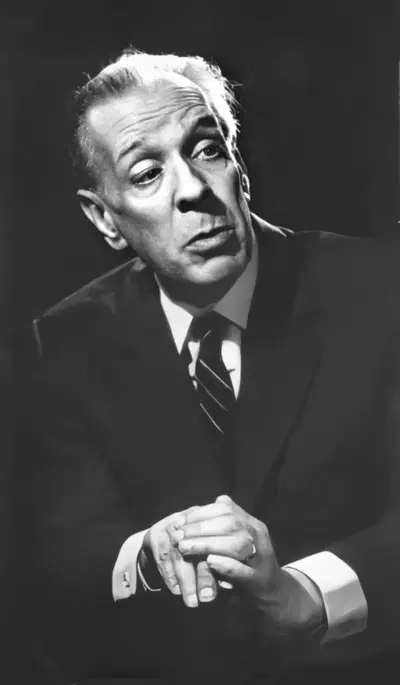
- Born: August 24, 1899
- Died: June 14, 1986
- Nationality: Argentinian
- Profession: Writer, Poet, Philosopher, Translator, Editor, Critic, Librarian
Jorge Francisco Isidoro Luis Borges Acevedo was an Argentine short-story writer, essayist, poet and translator, and a key figure in Spanish-language and universal literature. His best-known books, Ficciones (Fictions) and El Aleph (The Aleph), published in the 1940s, are compilations of short stories interconnected by common themes, including dreams, labyrinths, philosophers, libraries, mirrors, fictional writers, and mythology. Borges' works have contributed to philosophical literature and the fantasy genre, and have been considered by some critics to mark the beginning of the magic realist movement in 20th century Latin American literature. His late poems converse with such cultural figures as Spinoza, Camões, and Virgil.
