Greg Grandin Quotes
Most critical histories of U.S. involvement in Iran rightly began with the joint British-U.S. coup against democratically elected Prime Minister Mohammad Mosaddegh in 1953, which installed Pahlavi on the Peacock Throne. But it was Kissinger who, in 1972, greatly deepened the relationship between Washington and Tehran.
Grandin, Greg. Kissinger's Shadow: The Long Reach of America's Most Controversial Statesman. Metropolitan Books, 2015.

Mohammad Mosaddegh had been elected Prime Minister of Iraq. However, he was left leaning in the midst of the Cold War and some of our policy strategists thought that he could hurt the U. S. interests which were large there. Iran had huge oil reserves and American and British companies were active in operating the oil drilling and export. The new Prime Minister was threatening the British with oil nationalization to get a larger share of the oil revenue. The Shah, with CIA support, fired Mosaddegh, but that backfired and the Shah had to flee the country. This was when Smith sent this note to President Eisenhower. We were prepared to try and work with Mosaddegh. However, our chief ally did not agree and wanted to oust Mosaddegh. At the request of the British MI6 intelligence service, the CIA implemented a “spontaneous” coup d’etat to overthrow the popularly elected Iranian President Mohammad Mosaddegh. This enabled the Shah to return and take over. Ironically, although he was anti-Communist, he threatened the American and British Oil Companies and forced them to “renegotiate” their contracts with Iran and pay the Shah more money. The Shah was very unpopular with Iranians, and over the years the Iranians who opposed the Shah, blamed the United States for the fact that Mosaddegh had been overthrown and the Shah returned to power. See {637008} and {637007}.


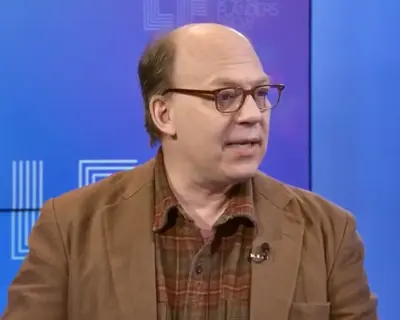
Greg Grandin (born 1962) is a professor of history at Yale University. He previously taught at New York University. He is author of a number of books, including Fordlândia: The Rise and Fall of Henry Ford's Forgotten Jungle City, which was a finalist for the Pulitzer Prize for History, as well as for the National Book Award and a National Book Critics Circle Award. A more recent book, entitled, Who Is Rigoberta Menchú?, focuses on the treatment of the Guatemalan Nobel Peace Prize winner. His 2014 book, The Empire of Necessity: Slavery, Freedom, and Deception in the New World, is a study of the factual basis for the novella Benito Cereno by Herman Melville.
