Benjamin N. Cardozo Quotes
Morality is not merely different in different communities. Its level is not the same for all the component groups within the same community.
Benjamin N. Cardozo, 1870-1938, Supreme Court Justice, Paradoxes of Legal Science
Sourced by: Eigen's Political and Historical Quotations


There were several dynamics that contributed to the change. Younger Americans of all persuasions were much more tolerant than previous generations. A much larger proportion of Americans did not identify with any religion. The many Christian sects were very diverse and almost never presented a unified view of exactly what were Christian values for any issue. The tactics of the religious extremists had alienated many people from all religious efforts to shape, much less dominate, the norms and culture. Finally, the Courts and the Politicians began to take the separation of church and state much more seriously than and been the case in many past generations.


At the time the Algerians leading the impendence movement were very secular, and were committed to modernity, multiculturalism and religious freedom and tolerance. Within Algerian Muslim society, there has been a constant battle against the right wing Islamic extremists and terrorists.


At the time Turkey was the only Muslim majority country where there was coexistence with secularism but with Christians and Jews as well. Ataturk, the great Turkish leader, turned Turkey around, modernized it, Westernized it, and made it a secular state with freedom of Religion, much like the United States. However, Erdogan’s party was constantly trying to make the state more Islamic as his electoral base were the poor, religious, Muslims.


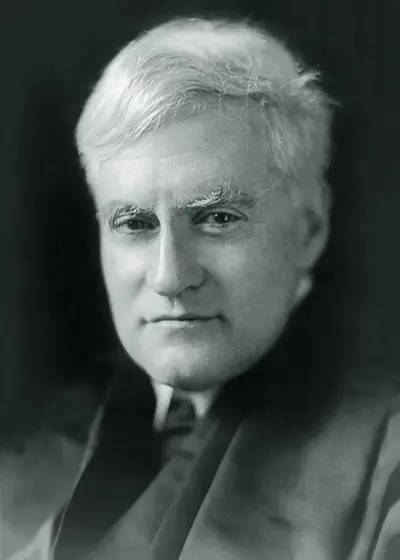
Benjamin Nathan Cardozo was an American jurist who served on the New York Court of Appeals and later as an Associate Justice of the Supreme Court. Cardozo is remembered for his significant influence on the development of American common law in the 20th century, in addition to his philosophy and vivid prose style. Cardozo served on the Supreme Court six years, from 1932 until his death in 1938. Many of his landmark decisions were delivered during his eighteen-year tenure on the New York Court of Appeals, the highest court of that state.
