Henry A. Wallace Quotes
Monopolists who fear competition and who distrust democracy because it stands for equal opportunity would like to secure their position against small and energetic enterprise.
Wallace, Henry A. "The Danger of American Fascism." The New York Times, 9 Apr. 1944, p. SM4.

In 1881 this view was that of a radical political outlier. In the first decades of the 21st century, this was a generally acceptable political viewpoint held by members of both major political parties.


Many of the far left grew disillusioned with the British Labor Movement and how it was relating to the capitalist companies, the government, and the workers. The Unions had become very undemocratic and controlling with the government pressuring both labor and companies to the degree that many felt that the institutions themselves were no longer free institutions. Ironically, they preferred the open competition of the American system at the time where unions and companies were free to fight out their differences.


Most companies in a capitalistic system compete mightily to obtain monopolistic positions so they can avoid capitalistic competition thereafter.

The National City Company was formed expressly as an attempt to dominate and monopolize the United States economy. It was a holding company that included Standard Oil, National City Bank, 16 other banks, and the Union Pacific and Southern Pacific railroads among others, all controlled by the same 3 men--William Rockefeller, .James Stillman, and Frank Vanderlip.


Here, an officer of a large corporation (Pittsburgh Plate Glass) makes the classic argument of large corporations about the anti-trust laws which prevent them from using their economic power to crush competition. The claim that the large corporations are at a disadvantage and handicapped in competing with small companies is easily refuted by the bankruptcy rate of small businesses which is large, and that of large corporations which is very small, and that of major monopolies which is virtually zero.


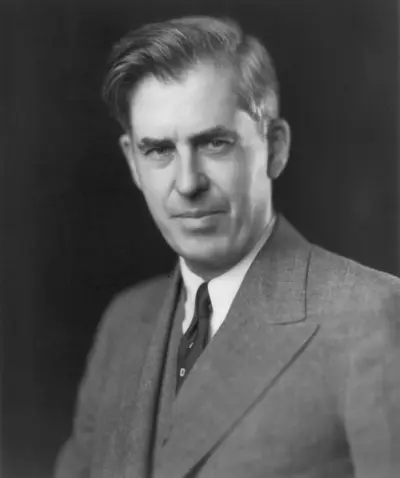
Henry Agard Wallace was an American politician, journalist, farmer and businessman who served as the 33rd vice president of the United States, as well as the 11th U.S. Secretary of Agriculture and the 10th U.S. Secretary of Commerce. He was also the presidential nominee of the left-wing Progressive Party in the 1948 election.
