Frederick Douglass Quotes
Money is the measure of morality, and the success or failure of slavery as a money-making system, determines with many whether...it should be maintained or abolished.


Essentially, the case of moral hazard was made against paying the slave owners. Lincoln took a pragmatic approach. However, not only was Northern opposition too strong for this proposal, but the Southern slave holders would never agree to selling their slaves. What Lincoln and most “pragmatic” Northerners did not realize is that even if the slave owners would get a fair market price for the slaves, they would be left with land and no way to work it. Their families would have no servants. They might have to work themselves like Northern farmers did, and their entire standard and style of living would be destroyed. Their sons were not well educated as many Northern young men were and were brought up to be gentlemen, politicians, and occasional soldiers—not work with their hands. They could not compete. And the slaveholders were right as the whole history of Reconstruction and backwardness demonstrated for more than 100 years.

Brown was executed for trying to steal federal arms and start a slave rebellion. However, to many Americans, his moral judgment was correct. He became a martyr for many abolitionists, and some Northern Civil War songs extolled him and saw his as an early forerunner of a great moral struggle. See Thoreau {633849} as an example. There were many other Americans who were abolitionists and did not approve of either of the method his violent raid or its purpose of arming the slaves as they feared a bloodbath of vengeance.

Although England had benefitted more from the industrial revolution than most nations, the English Aristocracy and its intelligencia saw business as inherently corrupt with minimal ethical standards and almost no transparency. See {629121} for a Christian religious version of this secular quotation.

Islamic modernists like Serageldin are many among the educated Muslims but their views are often drowned out by the violence and extremist statements of the fundamentalists.

Wilberforce was one of the early staunch opponents of slavery.


The speech was an attempt to justify the Dirty War and the kidnappings, tortures, and killing of many citizens.

After the civil war there was a concerted effort to shape American opinion away from the notion that the Civil War has mainly about slavery which we now know was a false notion. Slavery was the only significant issue for both sides. This quotation is cited by many who argue that the prospect of the end of slavery was tantamount to economic confiscation and impoverishment for the slave owning minority and hence it drove them to rebellion. Also, Davis and others argue that the value of the slaves was so great that there was no possible economic way to compensate the slave owners for emancipation at fair market value which was why that “compromise” never went anywhere.


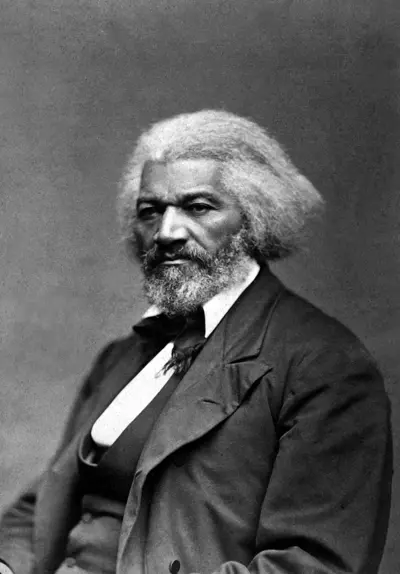
Frederick Douglass was an American social reformer, abolitionist, orator, writer, and statesman. After escaping from slavery in Maryland, he became a national leader of the abolitionist movement in Massachusetts and New York, becoming famous for his oratory and incisive antislavery writings. Accordingly, he was described by abolitionists in his time as a living counterexample to slaveholders' arguments that slaves lacked the intellectual capacity to function as independent American citizens. Likewise, Northerners at the time found it hard to believe that such a great orator had once been a slave.
