Mike Jackson Quotes
Military operations cannot be tidy or free of friction - particularly in a coalition whose contributing nations see the campaign through national prisms.
Jackson, Mike. Soldier: The Autobiography. Bantam Press, 2007.


See {640831} for more on this subject.

He used the “united nations” as a general description as the UN had not been created or named yet, However, as this quotation demonstrates, the President was already thinking about a UN idea, but as a realist, he explained that the great powers had to come to some agreement of interests. Actually China and France, at the time, would go along with whatever the United States and Britain wanted to do and had a great common interest, and there was already a strong association of interests between Britain and America. Russia was to be the problem and a complete common interest was never to be, but there was enough to get the United Nations started.


This resolution was bad enough for its overt racism. Ironically, the major victims of Japanese aggression have been Asians—China, Korea, Manchuria, and others. “White” empires had economic interests in throughout Asia and this was what Britten and many others were concerned with protecting. This quotation is important for another reason. At the very moment Britton introduced the resolution, Charles Evans Hughes our Secretary of State was welcoming a new, very high level ambassador to Washington. The administration had decided on a negotiating initiative and Britton and other Congressmen cut the legs out from under the administrations diplomatic efforts. It was particularly bad because one of the Japanese complaints about America and other white nations was their racism and discrimination against Asians. Congress undermining Administration diplomatic efforts has an all too frequent history in America.
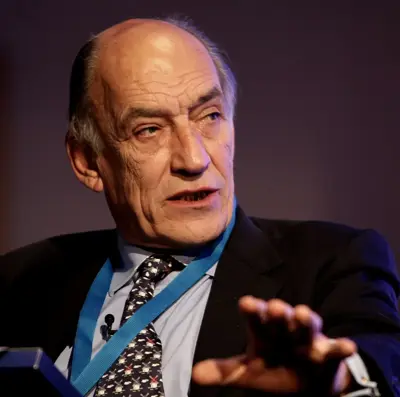
General Sir Michael David Jackson, GCB, CBE, DSO, DL is a retired British Army officer and one of its most high-profile generals since the Second World War. Originally commissioned into the Intelligence Corps in 1963, he transferred to the Parachute Regiment in 1970, with which he served two of his three tours of duty in Northern Ireland. On his first, he was present as an adjutant at the events of the Ballymurphy massacre (1971), where 11 unarmed civilians were shot dead by British troops, and then at Bloody Sunday (1972), when British soldiers opened fire on protesters, killing 14. On his second, he was a company commander in the aftermath of the Warrenpoint ambush (1979), the British Army's heaviest single loss of life during the Troubles. He was assigned to a staff post at the Ministry of Defence (MoD) in 1982 before assuming command of the 1st Battalion, Parachute Regiment, in 1984. Jackson was posted to Northern Ireland for the third time, as a brigade commander, in the early 1990s.
