Mary Roberts Rinehart Quotes
Men were not equal in the effort they made, nor did equal efforts bring equal result. ... Equality of opportunity, yes. Equality of effort and result, no.
Rinehart, Mary Roberts. My Story. Farrar & Rinehart, 1931, p. 302.


She had been a chorus-line dancer and a secretary before her political career was the first woman to be Speaker.


The debate over income inequality generally ranges between the two extremes of Christie’s hypothetical equal, mediocre salary to the extreme wealth of the 1% controlling most of the wealth. However , where America was moving in its most general affluent times was not towards equal compensation, but to a large range of remuneration with the low end and middle constantly increasing over time and the high end a reasonable multiple of the low end. However, the breakdown came in the last decades of the 20th century and the early 21st century when the low end did not increase (discounting for inflation) in 40 years, nor did the middle, while the high end increased enormously. So the nation had 40 years of growth without the lower or middle classes benefitting much and all the benefit going to the wealthy and most of that to the very wealthy. Thus the instinct was to tax the wealthy more heavily and spending the money to increase opportunity for the lower and middle classes. However, the political battle was waged over the taxing issue and not on what could be done to have the poor and the middle class obtain a larger proportion of the growth and a smaller percentage of the setbacks.


Sometimes falsely attributed to Jordan B. Peterson (even though he credits Solzhenitsyn).

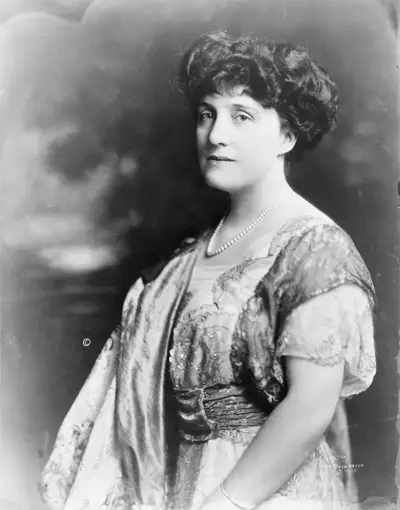
Mary Roberts Rinehart was an American writer, often called the American Agatha Christie. Rinehart published her first mystery novel The Circular Staircase in 1908, which introduced the "had I but known" narrative style. Rinehart is also considered the source of "the butler did it" plot device in her novel The Door (1930), although the exact phrase does not appear in her work.
