Percy Bysshe Shelley Quotes
Men of England, wherefore plough For the lords who lay you low?
Shelley, Percy Bysshe. The Poetical Works of Percy Bysshe Shelley, edited by Mary W. Shelley, vol. 3, Edward Moxon, 1839, p. 249.


This quotation and other material were so radical and inflammatory that Calhoun wrote and published this anonymously.


The Whites were the old nobility and conservatives who, after the Czar had been deposed, fought a civil war for control of Russia against the Reds—the Bolsheviks. The Whites were allied with the Cossacks, a particularly vicious, and cruel groups of traditional cavalry who previously had done much of the Czar’s dirty work. They were responsible for most of the Anti-Semitic pogroms, and their affiliation with the Whites pushed most Jewish Russians to the Reds.

In 1927 there was a Peasant Uprising in the Hunan Province of China. Young Mau went there and wrote a report. Mao and other young communist leaders had a much more acute appreciation of sloganeering than their older revolutionary comrades. Even into the 3rd millennium, the same “Down with Imperialism” slogan could be heard in many part of the world, long after the Soviet Union collapsed and China and become capitalistic.


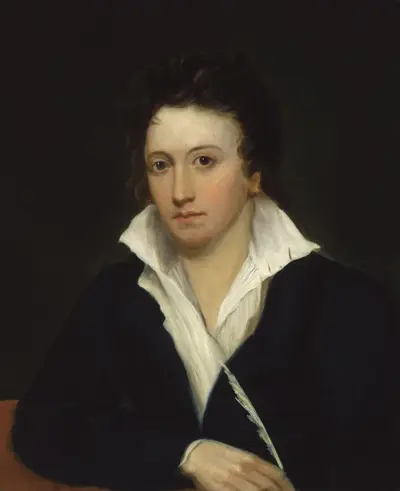
Percy Bysshe Shelley was one of the major English Romantic poets. American literary critic Harold Bloom describes him as "a superb craftsman, a lyric poet without rival, and surely one of the most advanced sceptical intellects ever to write a poem." A radical in his poetry as well as in his political and social views, Shelley did not achieve fame during his lifetime, but recognition of his achievements in poetry grew steadily following his death and he became an important influence on subsequent generations of poets including Browning, Swinburne, Hardy and Yeats.
