Solon Quotes
Men keep their agreements when it is an advantage to both parties not to break them; and I shall so frame my laws that it will be evident to the Athenians that it will be for their interest to observe them.
Solon, c. 638 BC-559 BC, Athenian Lawgiver, Quoted in George Shelley Hughs, Ancient Civilizations, 1896
Sourced by: Eigen's Political and Historical Quotations


This was part of the negotiation of a peace treaty with the Barbary States. The Barbary Pirates had an incredible extortion racket going in the Mediterranean. If nations would pay them an annual sum each year, they would not attack and seize merchant ships of that country and sell the ships and goods while holding the sailors for ransom. Military action on land and sea by American marines and naval ships had caused much damage and intimidated the Barbary States somewhat. See {640870}


She asked the same question that American officials in Afghanistan, Iraq, Egypt, Vietnam, and Korea have asked a for the next 100 years and longer. The officials of a true democracy can never be sure that the promises and commitments that they make in the name of their government will be honored in the future. The body politic can and often does have a substantial change of heart or mind.

He was summarizing a political principle that he observed Richard M. Nixon follow both in domestic politics and internationally.

Referring to the Peace between Japan and Russia which he had brokered and for which he had won the Nobel Peace Prize.
Discussing the possibility of renewing relations with Jordan after it had supported Iraq in the Gulf War, the ambassador wanted an admission of wrongdoing from Jordan.
First Published American Indian Author. His last public speech.


Individual states passed laws that impinged on Indian rights and undid the effect of previous treaties. Some tribes complained to the President. In actuality, there was Federal legislation that preempted the states, but President Jackson, as a matter of policy allowed the state action.


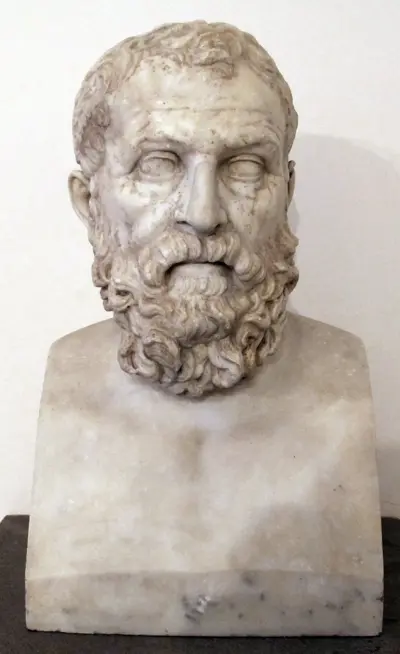
Solon (Greek: Σόλων Sólōn [só.lɔːn]; c. 630 – c. 560 BC) was an Athenian statesman, lawmaker and poet. He is remembered particularly for his efforts to legislate against political, economic and moral decline in archaic Athens. His reforms failed in the short term, yet he is often credited with having laid the foundations for Athenian democracy. He wrote poetry for pleasure, as patriotic propaganda, and in defence of his constitutional reform.
