Alexander Hamilton Quotes
Measures which serve to abridge the free competition of foreign Articles, have a tendency to occasion an enhancement of prices.
Hamilton, Alexander. "Report on the Subject of Manufactures, 5 December 1791." The Papers of Alexander Hamilton, vol. 10, edited by Harold C. Syrett, Columbia University Press, 1966, p. 286.


Referring to NAFTA, CAFTA and other international trade agreements


This historical quotation shows us that the nation under Republican control at the end of the 19th century was highly protectionist. In addition. It shows us how a party can flip flop on its most cherished principles. A century later, free trade was the cornerstone of Republican philosophy and opponents who held to the Republican 19th century principles were accused of being detriments to the American growth and economic system.


The Export-Import Bank lends money at good interest rates to foreign businesses to buy goods manufactured in the United States. It creates hundreds of thousands of American jobs each year, and costs the American taxpayer nothing; the bank actually makes money, None the less, it has been the policy of the extremist conservative Republicans like the Tea Party to oppose the bank’s charter renewal.


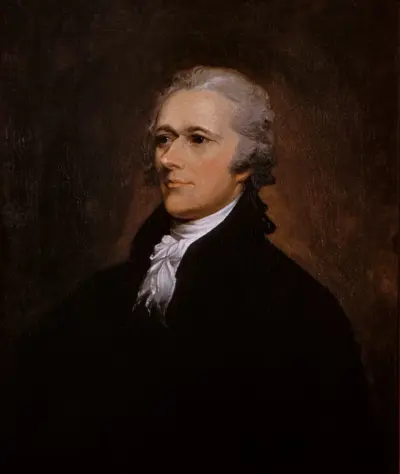
Alexander Hamilton was an American statesman, politician, legal scholar, military commander, lawyer, banker, and economist. He was one of the Founding Fathers of the United States. He was an influential interpreter and promoter of the U.S. Constitution, as well as the founder of the nation's financial system, the Federalist Party, the United States Coast Guard, and the New York Post newspaper. As the first secretary of the treasury, Hamilton was the main author of the economic policies of George Washington's administration. He took the lead in the federal government's funding of the states' debts, as well as establishing the nation's first two de facto central banks, the Bank of North America and the First Bank of the United States, a system of tariffs, and friendly trade relations with Britain. His vision included a strong central government led by a vigorous executive branch, a strong commercial economy, government-controlled banks, support for manufacturing, and a strong military.
