DeWitt Clinton Quotes
Masonry has erected her temples, as well as in the most frontier settlements, as in the most populous villages and cities.
Clinton also was the Masonic Grandmaster of New York State. The 10 Masonic Lodges in New York at the end of the Revolution had grown to 100 by 1806. 20 years later, there were 500 in New York alone and Freemasonry was flourishing throughout the new nation.
DeWitt Clinton, 1769-1828, Vice President of the United States (NY), U. S. Senator (Anti-Federalist Republican, NY), Mayor of New York City, Governor of New York, Peace Party candidate for President of the United States, “Father of Free Public Schools", 1806
Sourced by: Eigen's Political and Historical Quotations

This quotation is notable because it illustrates some of the ideas about cities that were suggested at the time. The growth of the suburbs was the largest of the changes that actually tool place.


This is a counter-intuitive fact which surprises almost everyone. Note that he does not claim that the entire world population could all live in New York, but the enormous amount of indoor space is clearly illustrated by the fact that all could fit in to the city.

This quotation shows another example of the paranoia about Masons/ Since the Masons had chapters in many nations, their loyalty was always suspect to the most nationalistic leaders of many countries. In the United States, we even had a national Anti-Masonic Party that elected Congressmen and other politicians. Fear of the foreign—Xenophobia—has existed in many countries.

Spengler and some others viewed with alarm the urban migration that had come with the industrial revolution. That migration was relatively minor compared to what took place in the remainder of the 20th century. In most developed coutries the rural population has become very small and the urban and suburban totally dominant.


Official `Russian Communist Party Publication. There was no way that the farming peasants could get money for their crops. They had to turn over most to the government to feed the cities. But without money, the peasants could not get the goods manufactured in the cities and there was little motivation for the peasants to farm.

Howard was one of the first people to recognize the migration from the country to the cities brought about by the Industrial Revolution and then suggest solutions. He advocated planned suburban communities that had some elements of the country, but allowed a density of people to function in an industrial economy. He called them “Garden Cities”. Forest Hills in New York and other American planned communities were much influenced by his thinking as were many other new communities since.
Cahokia was a very large Native American city just across the Mississippi River from St. Louis. In 1250, its population was about 15,000, comparable to that of London or Paris during the same period. At the time of the American Revolution, it was larger than New York, Boston of Philadelphia having 40,000 inhabitants at its peak. Tiahuanaco was a large city—30,000 at its peak—in Bolivia. The very ability to create and sustain such large communities shows that the Indians of the Americas were not simply hunter-gatherers but were very sophisticated in manipulating their environment and organizing large numbers of people.


English owners of Irish Estates did not get along with the Irish natives very well. They were perceived by most Englishmen as uncivilized, primitive barbarians who were not hard workers or industrious people. Further, England had turned Protestant and made Ireland such, and the Roman Catholic Irishment did not want to have much to do with the English who were occupying their land and robbing them of their religion. So the English estate managers sought to induce English to settle in Ireland.

The companies that pay well usually compete for highly talented people who want more than a good salary to move to a particular community.

Arguing that Slavery inhibited a society from development ...


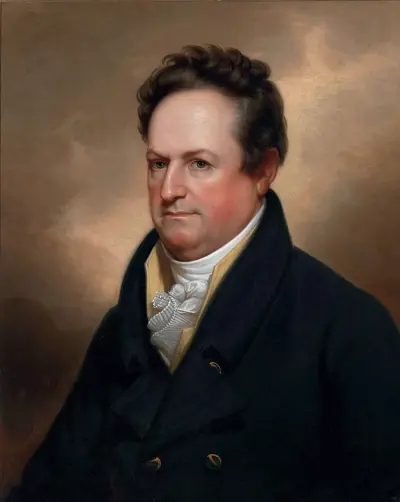
DeWitt Clinton, whose name was almost always spelled De Witt during his lifetime and until the late 20th century, was an American politician and naturalist. He served as a United States Senator, Mayor of New York City, and as the sixth Governor of New York. In this last capacity, he was largely responsible for the construction of the Erie Canal. Clinton was a major candidate for the American presidency in the election of 1812, challenging incumbent James Madison.
