Whitney M. Young Quotes
Martin Luther King does the cause of Civil Rights a disservice by linking it with the Vietnam issue.
Whitney M. Young, 1921-1971, Executive Director, The Urban League, Presidential Advisor (Lyndon B. Johnson) Washington Evening Star, September 20, 1965
Sourced by: Eigen's Political and Historical Quotations


Romney’s father, George W. Romney, was Governor of Michigan and lost in his attempt to be the Republican presidential candidate. He was a strong supporter of civil rights, but not only did Romney never see his father marching with King, there is no record that the elder Romney ever did march with King. He did march in a civil rights rally in Michigan but King was not present. The elder Romney was a strong supporter of civil rights however, and the son was trying to make the point that he came from a family where civil rights has always been important. This quotation became a cause célèbre in the 2007 Presidential primary campaign as critics gave this as an example of Romney’s disregard for the truth in his effort to be liked and gain support. Defenders claimed that this was a symbolic statement and an example of acceptable political hyperbole.


The March had begun in Selma with 600 marchers who were brutally beaten and harassed along the way. This brought clergy and lay people from the country over to join the protest march and when King gave the speech the marchers had swelled to 25,000.

King had called for peace negotiations with North Vietnam to include the Viet Cong, ceasing the bombing of North Vietnam, and seating Communist China to the United Nations. These were all contrary to U. S. Policy at the time. They all became U. S. Policy later.


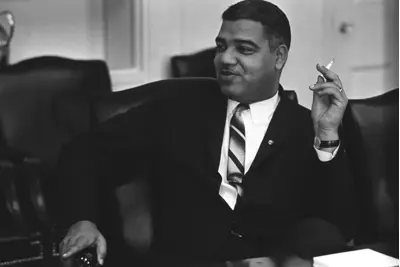
Whitney Moore Young Jr. was an American civil rights leader. Trained as a social worker, he spent most of his career working to end employment discrimination in the United States and turning the National Urban League from a relatively passive civil rights organization into one that aggressively worked for equitable access to socioeconomic opportunity for the historically disenfranchised.
