Vitruvius Quotes
Marshes that are stagnant and have no outlets either by rivers or ditches, like the Pomptine marshes, merely putrefy as they stand, emitting heavy, unhealthy vapors. A case of a town built in such a spot was Old Salpia in Apulia ... Year after year there was sickness, until finally the suffering inhabitants came with a public petition to Marcus Hostilius and got him to agree to seek and find them a proper place to which to remove their city.
Vitruvius. The Ten Books on Architecture. Translated by Morris Hicky Morgan, Harvard University Press, 1914, p. 21.


The South has always been backward compared to the rest of the nation. By the 21st century the gap had gotten narrower. However, one of the reasons that Mrs. Roosevelt was unpopular with the Southern whites was not only that she was an outspoken critic of segregation and associated with Negroes, but she would publically point out the areas of Southern backwardness. However, the upper and middle class Southerners resented anyone—especially “outsiders” publicly exposing Southern weakness.


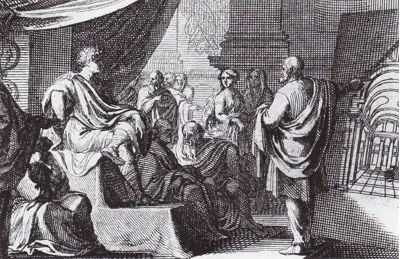
Marcus Vitruvius Pollio (/vɪˈtruːviəs ˈpɒlioʊ/; c. 80–70 BC – after c. 15 BC), commonly known as Vitruvius, was a Roman author, architect, and civil and military engineer during the 1st century BC, known for his multi-volume work entitled De architectura. He originated the idea that all buildings should have three attributes: firmitas, utilitas, and venustas ("strength", "utility", and "beauty"). These principles were later widely adopted in Roman architecture. His discussion of perfect proportion in architecture and the human body led to the famous Renaissance drawing of the Vitruvian Man by Leonardo da Vinci.
