Lactantius Quotes
Mars, when guilty of homicide, and set free from the charge of murder by the Athenians through favour, lest he should appear to be too fierce and savage, committed adultery with Venus.
Lactantius. The Divine Institutes. Translated by William Fletcher, Ante-Nicene Fathers, Vol. 7, edited by Alexander Roberts, James Donaldson, and A. Cleveland Coxe, Christian Literature Publishing Co., 1886, p. 22.


A number of the American soldiers refused to obey Calley's illegal order. Some helped some villagers to escape, and a helicopter pilot landed betreen Callery's men and the villagers they were shooting at, and ordered his helicopter machine gun crew to fire on the soldiers if they did back off. The soldiers stopped firing at the civillians. However, his and other reports of the massacre were covered up by the military for a few years. Mai Lai was not the only major war crime perpetrated by Americans in the Vietnam War; there had been a few others. But given the years of fighting and the many opportunities war crimes violations under orders were quite rare. The Viet Cong had many more war crimes that they perpetrated, and our South Vietnamese allies repeatedly committed war crimes against their own people.

This proverb only makes sense in the light of understanding the Arab concept of revenge—“blood.” In a rural desert environment where little can be expected of government, the Arabs have developed a law enforcement and peace keeping mechanism which while primitive from modern standards, nevertheless worked to some degree. It is that revenge—“blood” is a moral necessity and obligation of all people, and revenge is not limited by time or to the individuals involved in the first incidence. The immediate family are the first to extract revenge, but the extended family follows and often the entire clan. Sometimes revenge is tribal or even national. Anyone who fails to revenge a member in his group is not only a disgrace, but is a clear and present danger to the group because then they can be attacked with impunity. So revenge is a strong obligation of the group members and blood must be paid with blood no matter how many generations it may take. The only thing that keeps me and my family safe, is the surety what whosoever kills one of us will themselves be killed or if they die a natural death we will take revenge on one of the evildoers relatives. Crime must never pay!


Mandelstam was later sent to a Soviet gulag for writing a poem denouncing Stalin. He died there.


The Stoning coincidence for adultery between the Old Testament in Europe and the Middle East and the Aztecs of Mexico was probably nothing more. There is no evidence of any kind that the Aztecs of this period knew anything about the Bible.


This law is used to free “honor killing” murderers who have killed female relatives for what they thought was a sexual transgression that “stained the family honor.” The custom exists in some other countries but rarely with such sanction of law. In the case of Article 548 the word “witnesses” is interpreted to mean “heard about it” or even has some reason to suspect it. Each year in Syria hundreds of innocent women, and even girls are killed with impunity. In one 2007 case a 15 year old girl was kidnapped and raped. When she was freed by the police she was jailed. A cousin got her released by agreeing to marry her, but after the marriage, one of her own brothers, with the knowledge and concurrence of the rest of the family, butchered her with a knife. The family then held a party to celebrate the cleansing of their honor.


Peter was the first Russian Ruler to ever leave Russia. While he was gone, there was a rebellion of the Streltsi—the Muscovite Guard. Peter was the most urbane and sophisticated of the Russian rulers, but he was also capable of a traditional response of force. True to his word, he hung over 500 Streltsi from the Kremlin walls.

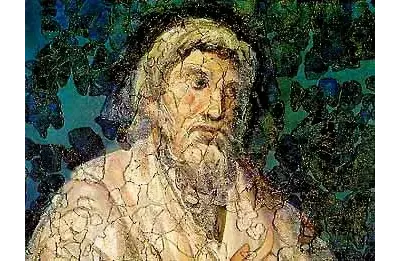
Lucius Caecilius Firmianus signo Lactantius (c. 250 – c. 325) was an early Christian author who became an advisor to Roman emperor, Constantine I, guiding his Christian religious policy in its initial stages of emergence, and a tutor to his son Crispus. His most important work is the Institutiones Divinae ("The Divine Institutes"), an apologetic treatise intended to establish the reasonableness and truth of Christianity to pagan critics.
