Empress Dowager Cixi Quotes
Making these changes is a matter of life and death for our country, and it will give our people a chance to lead a better life.
See {641842} for her previous decree on the subject.
Cixi, 1835–1908, Empress Dowager of China, Referring to the adoption and adaption of Western models and technology, Decree 1901
Sourced by: Eigen's Political and Historical Quotations

While this type of modernization had been a theme of her reign, it was particularly fascinating at this time when China had been invaded by Japan and 7 Western Countries, she still argued that the only way for China to thrive and attain true independence was to reform and adopt many Western Ways. Chinese leader after her gave lip service to doing this but never wanted to implement the reforms lest the lose power. Ironically, it was under Communist leader Deng Xiaoping, 1904-1993, that Cixi’s notion of adopting modern Western economic and technological models and approaches was finally implemented and then China made the greatest improvement of any large society ever in a relatively short term. However, Deng stopped short of adopting Western notions of political freedom.


1st Earl of Beaconsfield

Stalin was then only 26 years old. This was more than a decade BEFORE the Russian Revolution and Stalin was a young left wing revolutionary planning how to bring about a revolution and how the society should operate thereafter. He was then much the youthful, intellectual, Georgian idealist.


Although the Premier recognizes the importance of environmental protection it is difficult for China and other developing countries to make the necessary trade off’s at the expense of slower growth which means continued poverty. Even in the United States with all its affluence, slowing economic growth for environmental reasons is politically very difficult.


Historically, there are two situations where major changes are made in societies: 1) After great crises—wars, depressions, plagues etc. 2) At times of great prosperity when people are feeling very generous and magnanimous.

He was Governor-General of Korea when he made this statement.


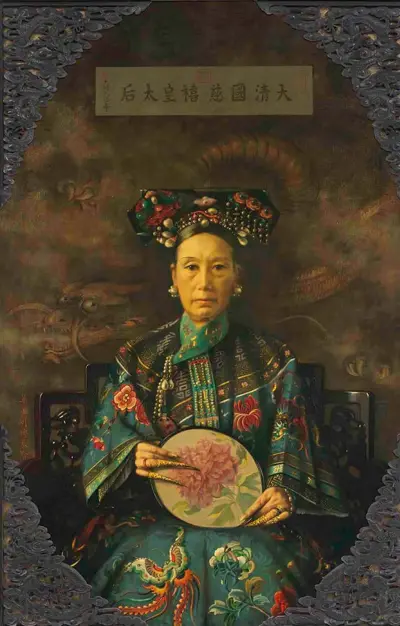
- Born: November 29, 1835
- Died: November 15, 1908
- Nationality: Chinese
- Profession: Noblewoman
Empress Dowager Cixi was a Chinese empress dowager and regent who was the de facto supreme ruler of China in the late Qing dynasty for 47 years, from 1861 until her death in 1908. Of the Manchu Yehe Nara clan, she was elected as a concubine of the Xianfeng Emperor in her adolescence and gave birth to a son, Zaichun, in 1856. After the Xianfeng Emperor's death in 1861, the young boy became the Tongzhi Emperor, and she became the Empress Dowager. Cixi ousted a group of regents appointed by the late emperor and assumed regency, which she shared with Empress Dowager Ci'an. Cixi then consolidated control over the dynasty when she installed her nephew as the Guangxu Emperor at the death of the Tongzhi Emperor in 1875, contrary to the traditional rules of succession of the Qing dynasty that had ruled China since 1644.
