Mary Parker Follett Quotes
Majority rule rests on numbers; democracy rests on the well-grounded assumption that society is neither a collection of units nor an organism but a network of human relations.
Mary Parker Follett, 1868-1933, Sociologist, The New State--Group Organization, the Solution for Popular Government
Sourced by: Eigen's Political and Historical Quotations

Comment on the Election of President Putin.


This is a very important quotation. Abraham Lincoln obtained a printed copy of Parker’s sermon and underlined this quotation on his copy. Later when he was President he used a slight variation of Parker’s last phrase in the last line of his famous Gettysburg Address.

The only soldier ever so honored. At the beginning of WWII, President Roosevelt and Churchill wanted the U. S. Army to invade German and Italian North Africa. Marshall, General Eisenhower, and all the other military men, advised that while it was possible, it would be a diversion from the strategic objective of invading Europe. None the less FDR ordered the invasion. The effect on the American people was wonderful, It showed that the Germans were not invincible, increased enlistment and morale at home, and developed more popular support for the war. Later, Marshall learned much about Democratic leadership and he, himself became a very effective government leader, and began to appreciate FDR’s approach but with a little cynicism about democracy.
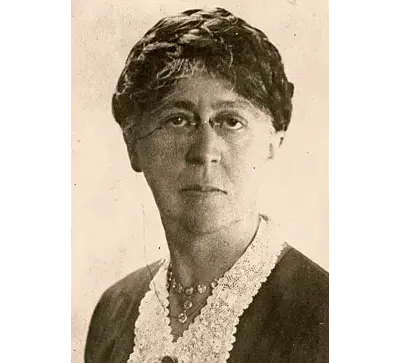
Mary Parker Follett was an American social worker, management consultant, philosopher and pioneer in the fields of organizational theory and organizational behavior. Along with Lillian Gilbreth, she was one of two great women management experts in the early days of classical management theory. She has been called the "Mother of Modern Management". Instead of emphasizing industrial and mechanical components, she advocated for what she saw as the far more important human element, regarding people as the most valuable commodity present within any business. She was one of the first theorists to actively write about and explore the role people had on effective management, and discuss the importance of learning to deal with and promote positive human relations as a fundamental aspect of the industrial sector.
