Greg Grandin Quotes
Like Hillary Clinton in the United States, Kuczynski is a prototypical member of the trans-American governing class, with deep roots in both the private and public sector and its revolving-door relationship between Washington think tanks, the State Department, and high-level Latin American ministries.
Grandin, Greg. "Peru's Election Is a Reminder of the Failures of Neoliberalism." The Nation, 2016.


The Chairmen of the Committees then had tremendous, almost unilateral power. The chairman reached seniority by being elected over and over and had little opposition. At the time they were almost all older Democratic Congressmen from the "Solid South", very conservative and still racists despite the 1964 Civil Rights Act. They were outraged when a Freshmen member of Congress who rarely made a public statement, took on the most powerful members of the House and wanted to reform the Seniority. But Ms. Chisholm was a teacher in her professional life, and by challenging the seniority system and attracting the enmity of most of the Chairmen, the media and the public started to cover the dispute and Chisholm explained to America exactly how the system worked and how undemocratic and racist it was. Her effort put the Seniority System on the public agenda, and reforms evolved over the next decades." She was the first Black woman to be elected to Congress and was the first Black woman to actively campaign for the Presidency


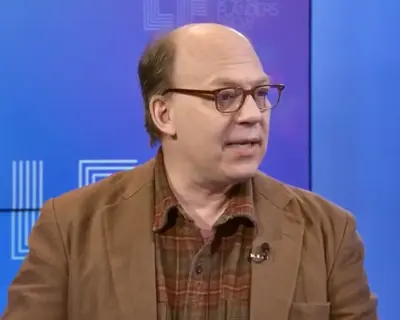
Greg Grandin (born 1962) is a professor of history at Yale University. He previously taught at New York University. He is author of a number of books, including Fordlândia: The Rise and Fall of Henry Ford's Forgotten Jungle City, which was a finalist for the Pulitzer Prize for History, as well as for the National Book Award and a National Book Critics Circle Award. A more recent book, entitled, Who Is Rigoberta Menchú?, focuses on the treatment of the Guatemalan Nobel Peace Prize winner. His 2014 book, The Empire of Necessity: Slavery, Freedom, and Deception in the New World, is a study of the factual basis for the novella Benito Cereno by Herman Melville.
