Samuel Butler Quotes
Life is the art of drawing sufficient conclusions from insufficient premises.
Samuel Butler, 1835-1902, British Satirical Writer, Note Books
Sourced by: Eigen's Political and Historical Quotations


Even today, the lack of logic in many fields—especial politics and public policy—has caused an intellectual and emotional rift between scientists and many in government. Bush was one of the great scientists and thinkers in American history. He had advised FDR to go ahead with the research and development program to try and develop an atomic bomb. He was the only Government Official who Roosevelt discussed the idea with. At the time, Bush as a government official supervised and directed many thousands of scientists, and was one of just a few scientists who monitored and advised on the Manhattan Project to develop the Bomb.

See {630694} for a later, more specific instance where Hand’s principle was required operationally.


When issues are complicated, trusting your instincts and intuition is very dangerous. There are so many variables that interact that you really have to analyze and think through all the possible options to avoid problematical unintended consequences and interactions.

The Labor Department never would commit to a recommendation. The Job Corps leadership examined the insufficient data and made their best guess which for the most part turned out to be right as the Job Corps was the most effective youth job training program in the history of the country. It and Head Start were the only two of the anti-poverty programs that were still operational into the 21st century. Supreme Court Justice Learned Hand expressed the same idea more generally in {482001}.


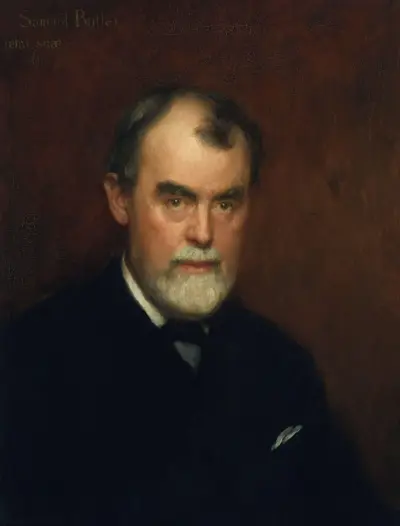
Samuel Butler was an English novelist and critic. He is best known for the satirical utopian novel Erewhon (1872) and the semi-autobiographical The Way of All Flesh, published posthumously in 1903. Both have remained in print ever since. In other studies he examined Christian orthodoxy, evolutionary thought, and Italian art, and made prose translations of the Iliad and Odyssey that are still consulted today.
