Mohamed ElBaradei Quotes
Libya is a good example of a country that has come to a realization that weapons of mass destruction threaten more than assure, and I hope that will be followed by others.
ElBaradei, Mohamed. "Statement to the IAEA Board of Governors." IAEA, International Atomic Energy Agency, 2004.


The President had asked for the views of the Joint Chief’s of Staff. At the time, the major U. S. defense doctrine depended on our nuclear deterrent which if used against the Russians would have meant mutually assured destruction since they had enough of a nuclear arsenal to destroy America as we know it.


The Palestinians in Gaza, led by the Terrorist Group Hamas, fired over 1000 rockets into Israel killing 5 people. The Israeli Defense forces finally retaliated and destroyed much of the Hamas infrastructure and killing the Hamas military leader. A number of other countries were trying to broker a cease fire and Blitzer was trying to determine what each side wanted.

One new danger that nuclear powers add to the usual problems of conflict, is that a nuclear power, about to lose a war in a humiliating way, might just use his nuclear weapons in revenge. So much damage will be done that the victory turned out to have been a bad thing. So ironically, with a nuclear enemy. Your military dare not win to dominantly with conventional weapons.

Many politicians and military thinkers disagree with Kraus. America, England, France, Russia, and Israel have all demonstrated over the years that even with great provocation they would not resort to nuclear retaliation nor have they ever threatened use of WMDs. Iran, in contrast, has repeatedly stated as one of their major objective, the total destruction of another UN member state—Israel. Further, Iran has never possessed a weapon that it did not use shortly after possession, including poison gas. Therefore America and the United Nations have all determined that a double standard is necessary with Iran.
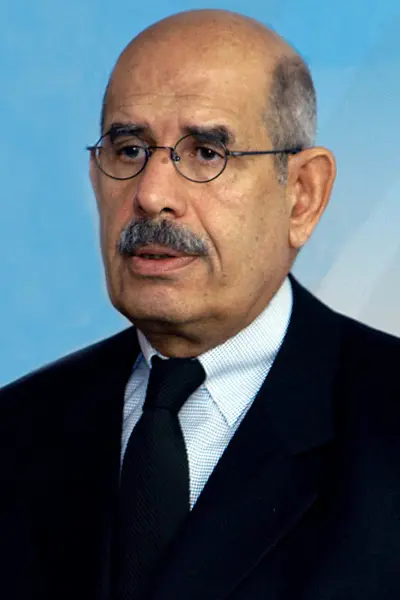
Mohamed Mustafa ElBaradei is an Egyptian law scholar and diplomat who served as Vice President of Egypt on an interim basis from 14 July 2013 until his resignation on 14 August 2013.
