Mao Zedong Quotes
Liberalism is: To let things drift if they do not affect one personally; to say as little as possible while knowing perfectly well what is wrong, to be worldly wise and play safe and seek only to avoid blame
“Liberalism” was a catch all Chinese term at the time which was very derogatory in Communist vernacular very much like the negative connotation of liberalism to American Conservatives at the turn of the millennium 1990-2010.
Mao Tse-Tung, 1893-1976, Chairman, Communist Party of China, Chinese Revolutionary Leader & Political Philosopher, Founder, The People's Republic of China
Sourced by: Eigen's Political and Historical Quotations

“Liberalism” was a catch all Chinese term at the time which was very derogatory in Communist vernacular very much like the negative connotation of liberalism to American Conservatives at the turn of the millennium 1990-2010.
“Liberalism” was a catch all Chinese term at the time which was very derogatory in Communist vernacular very much like the negative connotation of liberalism to American Conservatives at the turn of the millennium 1990-2010.


She was found guilty of treason because she had passed out leaflets criticizing the Nazi regime on a university campus. The non violent resistance tactics were so threatening to the Nazi German regime that Sophia and other members were executed by guillotine beheading as a particularly harsh example. The graphic is a postage stamp that Germany has issued in her honor.


He served Presidents Reagan, Clinton, and both Bushes
This is a very noteworthy quotation. The reason is that in America, the extreme right wing accuses liberals of being communists or supporters of communism. However, here one of the two major Communists in the world, condemns liberalism and states that liberals are the enemy of communism.


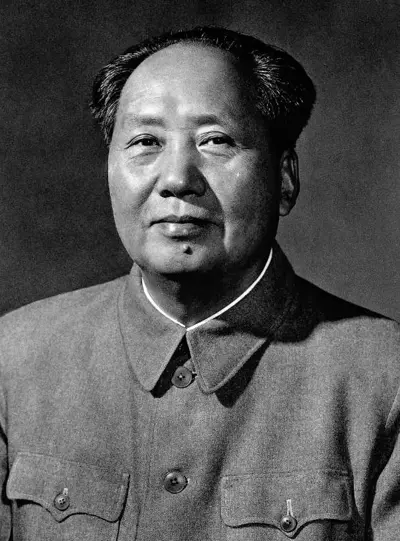
Mao Zedong, also known as Chairman Mao, was a Chinese communist revolutionary who was the founder of the People's Republic of China (PRC), which he ruled as the chairman of the Chinese Communist Party from its establishment in 1949 until his death in 1976. Ideologically a Marxist–Leninist, his theories, military strategies, and political policies are collectively known as Maoism.
