Saint Patrick Quotes
Let who will scoff and revile - I will not remain silent; neither will I conceal the signs and wonders which have been shown to me by the Lord, who knew all things even before the time of this world, many years before, just as they happened.
Patrick, Saint. The Writings of St. Patrick, the Apostle of Ireland. Translated by Charles H. H. Wright, Religious Tract Society, 1889, p. 65.


“Qur’an” is another way of spelling “Koran”. The belief in the perfection of the Koran is fairly common in Islamic nations. If Sharia is the civil law, as many Muslims insist that it is or should be, then there is no system of amendment and nothing that has occurred or has been learned since 800 AD that is any reason to improve or modify the law. Modern Islamic nations cope with this problem in one of three ways. The Fundamentalists take the Koran literally in all things and nothing is ever amended or modernized. Modernists will treat the Koran and Sharia as metaphorical and interpret it in the light of the modern world. More secular nations (like Turkey and Indonesia) reject Sharia as a civil legal system or as a source of inspiration of civil law.


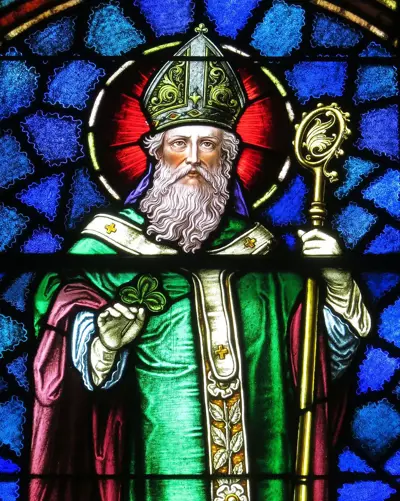
Saint Patrick (Latin: Patricius; Irish: Pádraig [ˈpˠaːd̪ˠɾˠəɟ]; Welsh: Padrig) was a fifth-century Romano-British Christian missionary and bishop in Ireland. Known as the "Apostle of Ireland", he is the primary patron saint of Ireland, the other patron saints being Brigit of Kildare and Columba. Patrick was never formally canonised, having lived prior to the current laws of the Catholic Church in these matters. Nevertheless, he is venerated as a Saint in the Catholic Church and in the Eastern Orthodox Church, where he is regarded as equal-to-the-apostles and Enlightener of Ireland. He is also regarded as a Saint within the framework of their respective doctrine by the Anglican Communion and the Lutheran Churches.
