Theodore Parker Quotes
Let us do our duty in our shop or our kitchen, in the market, the street, the office, the school, the home, just as faithfully as if we stood in the front rank of some great battle, and knew that victory for mankind depended on our bravery, strength, and skill. When we do that, the humblest of us will be serving in that great army which achieves the welfare of the world.
Parker, Theodore. Lessons from the World of Matter and the World of Man. Charles W. Slack, 1865, p. 278.


This may be Kennedy’s most famous line. However he was not the first orator to express this idea however. See Khalil Gibran {601423}, Warren G. Harding {622594} and {629021}, St. John Broderick {595734}, and Oliver Wendell Holmes Jr. {603707} for earlier expressions of similar sentiments. Holmes seems to be the first to express the idea while the earliest seems similar phraseology seems to be the British Politician St. John Broderick in 1893 {595734}. Although, these earlier expressions existed, Theodore C. Sorensen, who assisted Kennedy with this speech and wrote the draft, had distilled it from earlier expressions and views of JFK and said that these were Kennedy’s words. At the time, he stated that was unaware of the Gibran, Harding, Broderick and Holmes sentiments. Gibran had not yet even been translated into English. However it is not clear whether Kennedy himself had inadvertently recollected the phrase from any of the other quotations. (The question was never put to him.) The St. John Broderick quotation is a possible source. Kennedy was quite familiar with British political history, and his father and been U. S. Ambassador to Great Britain. Regardless, the quotation was as great for the place and timing—his inaugural—as it was for the phraseology which might have originated elsewhere.


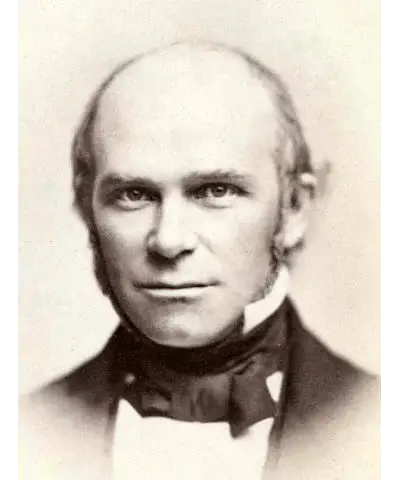
Theodore Parker was an American transcendentalist and reforming minister of the Unitarian church. A reformer and abolitionist, his words and popular quotations would later inspire speeches by Abraham Lincoln and Martin Luther King Jr.
