Theodore Roosevelt Quotes
Let individuals contribute as they desire; but let us prohibit in effective fashion all corporations from making contributions for any political purpose, directly or indirectly.
Roosevelt, Theodore. "Fifth Annual Message." 5 Dec. 1905. A Compilation of the Messages and Papers of the Presidents, vol. 14, Bureau of National Literature, 1911, p. 7023.

At the time this was a very widely held, bipartisan view. See {634818} . Given statements like this, TR if he were alive today would never be able to get the Republican Nomination for President; nor could he obtain the Democratic Nomination because of his view on the military, expansionism, defense spending and war.


See {640687}. He was then very worried about the influence of money in politics and was willing to risk his own reelection by limiting his contributions. And he was the Republican presidential candidate so his policy was particularly unusual. A century later money in politics had ballooned to a much larger problem as Taft’s action had little or no effect on the overall relationship between money and politics outside of his campaign.


Not only both parties agreed on the evil of corporate money in politics, but there was not even a single dissent on this point. Also, the President was in agreement {634816}. A century later, there were only a handful of senators who did not think that corporate money was critical in politics. This was a flip flop for BOTH major parties.


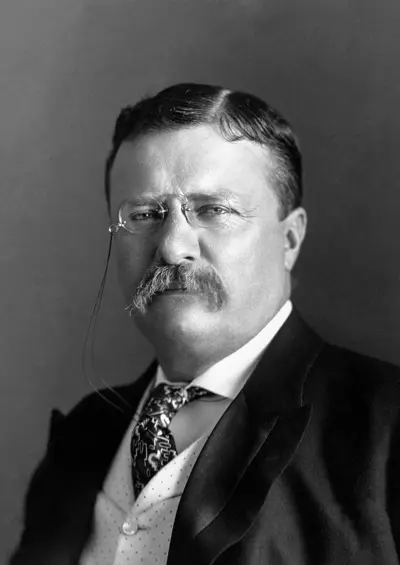
Theodore Roosevelt Jr., often referred to as Teddy or his initials T. R., was an American statesman, conservationist, naturalist, historian, and writer, who served as the 26th president of the United States from 1901 to 1909. He previously served as 33rd governor of New York from 1899 to 1900 and the 25th vice president of the United States from March to September 1901. Roosevelt emerged as a leader of the Republican Party and became a driving force for anti-trust and Progressive policies.
