Viktor Mikhailovich Chernov Quotes
Lenin is an absolutely honest man, but a man with a one-track mind. For that reason his moral sense has been dulled. Lenin's socialism is a blunt socialism; he uses a big ax where a scalpel is needed.
Chernov opposed the Bolsheviks and left Russia for Europe and the United States where he lived out his life.
Viktor Mikhailovich Chernov, 1873–1952, Russian Revolutionary Leader, Chairman of the Russian Constituent Assembly, Minister of Agriculture (in the Kerensky government), Characterization of Lenin
Sourced by: Eigen's Political and Historical Quotations


Only 6 years after the Russian Revolution Lenin was already being perceived as an international provocateur and instigator of problems.
Lenin was amoral with respect to war and politics and assumed that his opponents were as well.

Although very authoritarian in his governing style, the substance of the Constitution that and basic laws that he imposed on post war Japan were extremely left wing. Japan eschewed having a military, required total equality of women for the first time in Japanese history. The Civil Service was given great power and authority over business, there was a complete social safety net. MacArthur would not take kindly to this characterization as he thought of himself as a lifelong conservative and was the darling of the American right wing extremists. He took the American Constitution literally and was determined to turn ultra-militaristic Japan into a democracy. He did in one of the most dramatic cultural and governmental changes in history.


Ataturk was not receptive toward Communism as some other world leaders were at the time. He saw its weakness far earlier than many others.

First Lady Eleanor Roosevelt had more influence and visibility than any other first lady, before or since. She was First Lady for 3+ terms—longer than any other, and in addition to her official duties, she wrote a very popular daily newspaper column. As FDR was handicapped and could not travel much, she traveled all over the nation and the world. She was also very outspoken and no one ever knew whether or not she was speaking with the President’s concurrence or was on her own. She tended to be very liberal—especially in terms of the evils of racial segregation—then legal, and the problems of workers. Her broad influence was very damaging to Southern Segregationist groups and arch Conservative economic groups, who realized that her influence in the change of public opinion was much more effective at changing America than were the socialists and communists who were calling for revolution and were so unappealing that they could easily be attacked. Mrs. Roosevelt was for them more dangerous than Communism.

The description of Buddhists, Christians, and Communists as “fanatics” is one of the many degradations of others by the Scientology founder.

Before Governor Mecham was impeached, Senator John McCain called for his resignation. After Mecham was impeached for misusing State funds and thwarting investigations of death threats, he commented upon McCain's qualifications for a place on the Republican national ticket:


Greece was bitterly divided between left and right. Morrow and others were very critical of policies, practices and corruption of both sides much to the chagrin of our State Department which was siding with the right out of fear of communism.

Vladimir Lenin. Although Lenin’s letter was given to the Central Committee by his wife, it was not read or debated at the Congress and Stalin was elected.


While Lenin was admired for his skill by his revolutionary colleagues, many had their concerns.

Lenin, Uritsky, and other Bolshevik leaders were attacked in 1918. Lenin was wounded but Utrtsky died, and this triggered the attacks on the other Russian factions by the Bolsheviks known as the “Red Terror.”
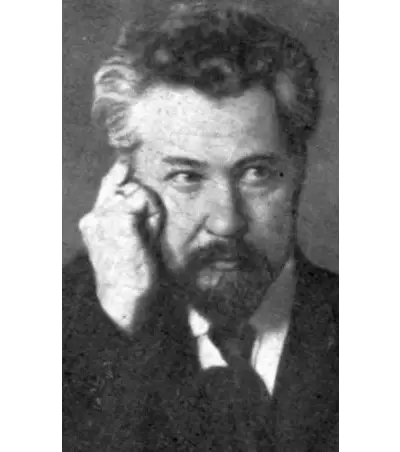
Viktor Mikhailovich Chernov was a Russian revolutionary and one of the founders of the Russian Socialist-Revolutionary Party. He was the primary party theoretician or the 'brain' of the party, and was more analyst than political leader. Following the February Revolution of 1917, Chernov was Minister for Agriculture in the Russian Provisional Government and advocating immediate land reform. Later on, he was Chairman of the Russian Constituent Assembly.
