Richard Perle Quotes
Law-abiding citizens value privacy. Terrorists require invisibility. The two are not the same, and they should not be confused.
Frum, David, and Richard Perle. An End to Evil: How to Win the War on Terror. Random House, 2003.


He was the Chairman of the Senate Judiciary Committee. The intelligence and law enforcement advocates of reducing privacy rights so that law enforcement can prevent acts of terrorism frame the question as a tradeoff between civil right and safety. However, as Leahy and many others point out, we would not be much safer if we gave up all our ivil rights. Further, hundreds of thousands of American have given their lives so that we would have those civil rights. Without them what are we protecting.


He was the Chairman of the Senate Judiciary Committee. The Islamic fundamentalist terrorists are repugnant to us because they have no respect for Civil and Human Rights and would deny us what we value so highly and for which so many Americans have sacrificed. We are little better off if we surrender our civil rights in order to cope with the problem of losing our civil rights to the likes of the Taliban and Al Qaeda.

While this sounds good, in Taiwan it is not clear that the Premier has any authority over the intelligence agencies that is meaningful. Even in the United States Major intelligence leaders have lied to Presidents and the Congress about their clearly illegal activities, and many sceptics suggest that the Premier would have no way of knowing what his intelligence agencies are actually doing.


The Grammar Curmudgeon


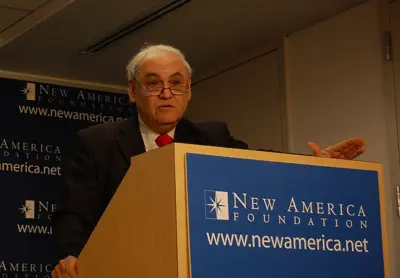
Richard Norman Perle is an American political advisor who served as the Assistant Secretary of Defense for Global Strategic Affairs under President Ronald Reagan. He began his political career as a senior staff member to Senator Henry "Scoop" Jackson on the Senate Armed Services Committee in the 1970s. He served on the Defense Policy Board Advisory Committee from 1987 to 2004 where he served as chairman from 2001 to 2003 under the Bush Administration before resigning due to conflict of interests.
