George Orwell Quotes
Laval is a French millionaire who has been known for many years to be a direct agent of the Nazi Government. He played a leading part in the intrigues which led to the downfall of France
Leval was an appeaser and a collaborator with the Nazi’s. He led the government in name but the Germans really controlled the country. His actions killed tens of thousands of French men and women by turning them over to the Germans. After the Germans were defeated in WWII, Leval was shot as a traitor by the Free French forces.
George Orwell, 1903-1950, Pen-name of English Writer Eric Blair, Referring to French Premier Pierre Laval, the French Prime Minister for the Vichy Government, BBC radio broadcast April 18, 1942
Sourced by: Eigen's Political and Historical Quotations

Leahy also served as the U. S. Ambassador to the Vichy French Government. This was the German puppet government where traitors like Laval operated a government that was French in name only. After the war Laval was executed as a traitor. Vichy was the area of France where the Fascist French set up their government. See {587230} and {587229}.

Leval was an appeaser and a collaborator with the Nazi’s. He led the government in name but the Germans really controlled the country. His actions killed tens of thousands of French men and women by turning them over to the Germans. After the Germans were defeated in WWII, Leval was shot as a traitor by the Free French forces. See {587231}, {587228} and {587230}.
Laval was not quite correct. He was shot as a traitor when de Gaulle returned. See {587231} and {587230}.

Many of the workers never returned.


He was shot as a traitor when de Gaulle returned. See {587231} and {587230}.

When John L. Lewis called for a miners’ strike in 1943, the Communists lashed out at him and accused him of being a Nazi sympathizer. Communist patriotism was not due to fondness for the United States and their military; in fact, before Hitler invaded Russia at the beginning of World War II, communists, for the most part, were outspoken opponents of U.S. militarism.

De Gaulle was a very difficult ally. He was ashamed that so many of his countrymen collaborated with the German invaders including fighting against the allies and the collapse of the French Army which, although it was larger than the German invader, had exhibited much cowardice. His way of dealing with this shame was to exaggerate the positive role that the loyal French and the serious Free French Fighters and to deny the extent of the negative behavior. He was always demanding that the small Free French Army be included in all military operations, and when successful, they be given equal credit along with the British, Americans, and Russians even though the French only contributed a tiny proportion of the effort. De Gaull’s ego, personal and national was enormous and Churchill had just as great a national ego. Hence for De Gaulle, Churchill was a kind of enemy. The “Channel” referred to the English Channel.

Switzerland stayed neutral because they initially feared a German invasion. Then they found that they were making a great deal of money from the war, including huge profits from dealing with the gold that Nazis had looted or taken from the fillings in the teeth of Holocaust victims. So long after there was no fear of German invasion, the Swiss still maintained neutrality but aided and made profits from the German war effort while they exterminated millions of people. At the end of WWII, Switzerland was the richest country in Europe. Later it was discovered that the Swiss hid the fact that they had many millions of dollars in deposits from Jews who had been killed by the Nazis and were making no effort to find the survivors or in the event of death giving the money to the nearest relatives. As a result of this report and a number of lawsuits filed in America against the Swiss Banks, a courageous Swiss member of Parliament who discovered the extent of the duplicity of the Swiss Banks, a bank employee who refused to destroy the records of all the illegal funds the Banks had, and political pressure applied to Switzerland from many other countries, a settlement was reached whereby the Swiss banks turned over large sums of money to non-Swiss organizations which tried to distribute the money to survivors and heirs.

The general was replacing George S. Patton as commander of the Third Army. Patton had opposed the deNazification policy of the allies and caused a great deal of public relations difficulty for the army command and the administration, as reporters would frequently print his views. Truscott was one of Patton’s loyal assistants. The minute he took over, the press wanted to find out if his views were the same as his former boss regarding the Nazis. They were quite different. Reporters had no story.

Wilson had asked him to give more consideration to the German point of view in World War I peace negotiations.


Cooper had resigned from the government after Prime Minister Neville Chamberlain returned from his meeting with Hitler with the naïve view that peace could be made with Germany. There was a significant pro-Fascist, Nazi sympathetic segment of British society including the former King, the Duke of Winsdor, who were in favor of making an alliance with Hitler and not opposing the Nazi “reform” of Europe. Surrender was his word for their alternative.


She, like her husband and many of the America Firsters, believed that Hitler should be allowed to overrun Europe and Russia. See {613688}. The America First group was a pro-fascist organization who supported the axis powers until they declared war on the United States. Even then, there were some Nazi sympathizers who were anti-immigrant, racist and anti-Semitic in addition to being fascists. Both of the Lindberghs were America Firsters

This was the point of view that was adopted by the Western Allies about the German Nazis and collaborators in the other European nations. However, not everyone agreed at the time with this policy. Lord Russell, the British Nuremburg Prosecutor resigned over this policy. He had case files against over 100,000 Nazi’s who had committed war crimes that he was not allowed to pursue. There was one Western county that did not follow this policy—Norway. They actually tried, convicted and jailed 10 percent of their entire population for collaboration. Their rehabilitation was just fine without the services of these criminals and they became the richest per capita country in the West including the U.S. The issue will be debated by historians of each generation.


He had abdicated and was serving as the Governor of the Bahamas at the time. While the public was given the reason for has abdication as his love for a divorced woman, his pro Nazi viewpoints which were not publicly known in England, made him unacceptable and his treason a danger to England at war with Nazi Germany.

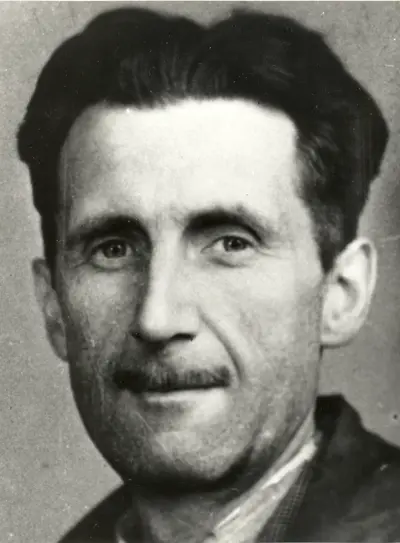
Eric Arthur Blair, known by his pen name George Orwell, was an English novelist, essayist, journalist and critic. His work is characterised by lucid prose, biting social criticism, opposition to totalitarianism, and outspoken support of democratic socialism.
