Hjalmar Branting Quotes
Last year, the Assembly of the League, as a result of the initiative taken by the Scandinavian nations, further limited and clarified all the provisions of the clause prescribing the duty of states to participate in sanctions.
Branting, Hjalmar. "Fraternity Among Nations." Nobel Lectures, Peace 1901-1925, edited by Frederick W. Haberman, Elsevier Publishing Company, 1972, pp. 325-333.

1st Earl Lloyd-George of Dwyfor. International organizations have been notoriously inept at protecting countries from aggression or minorities from persecution and ethnic cleansing and genocide. The Armenian genocide by the Turks was the exemplar at the time, but the UN peacekeepers refused to fight to prevent the Serbs from murdering 7,000 Bosnian Muslims. When they were protecting the Israeli-Palestinian borders, they did nothing to stop Arab Armies from attacking Israel right through the UN Troops. They did nothing to help prevent the Ruanda genocide. UN “troops” are rarely willing to risk their lives for the victimized people or the International Organization itself.


At the outbreak of the Civil War the President maintained that the United States was not at war with another nation but was merely putting down a rebellion. When he then ordered a blockade of Southern ports, he was legally blockading his own country. See Thaddeus Stevens.


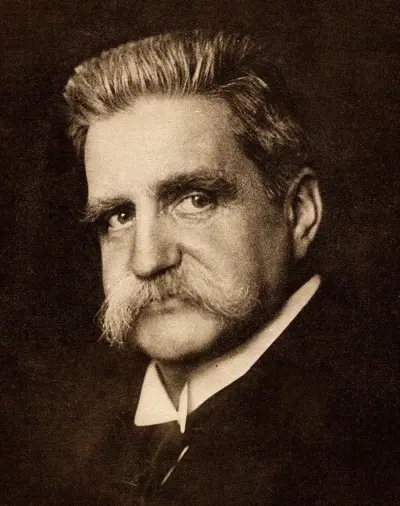
Karl Hjalmar Branting was a Swedish politician who was the leader of the Swedish Social Democratic Party (1907–1925) and Prime Minister during three separate periods (1920, 1921–1923 and 1924–1925). When Branting came to power in 1920, he was the first Social Democratic Prime Minister of Sweden. When taking office for a second term after the general election of 1921, he became the first socialist politician in Europe to do so following elections with universal suffrage. In 1921, Branting shared the Nobel Peace Prize with the Norwegian secretary-general of the Inter-Parliamentary Union Christian Lous Lange.
