John Buchanan Robinson Quotes
Large sums were paid for the use of money, because the available amount of gold and silver was far less than was needed to carry on the commercial transactions of the times.

This was a very astute prediction. At the time, the United States gold mining production was second only to South Africa and American currency was based on the gold standard which seemed to all to be permanent. Half a century later, the U. S went off the gold standard.


There has always been a fear of inflation and currency debasement by governments. Since ancient times, rulers issued coins and when they were made of cheap metals like copper or iron, the ruler could mint as much as he wanted and when he did so the value went down. By using only precious metals, gold and silver, for coins, there would be a natural restraint on government. Garfield was one of those who believed that we should always have money of gold and silver. The United States would use that principle for the next century even backing its paper money with gold and silver. In the Nixon administration the United States abandoned the gold standard. Today, it is the ability of a country to produce things that maintains value of paper money which has been supplanted in many cases by electronic money.


This is the first major history of banks written in the United States.

When gold and silver were used to make coins, there were dozens of schemes to cheat people. Many of these would be implemented by the official mints (makers of coins) often with the connivance of the ruler who would often get a cut. Davanzati warned princes against debasing the coins on moral as well as pragmatic grounds.


Economists they world over have differed as to how critical it was to have a money supply that is based on a gold standard or other precious metal. United States history has had a dispute over whether the money should be backed by gold or silver. Finally, under the Richard M. Nixon administration, the United States went off the gold standard and American money ever since is only backed by the ‘full faith and credit’ of the United States. Some politicians like Paul believe this is a poor policy since it allows governments to control their own money supply irrespective of their gold or silver holdings. Paul goes further than most and sees freedom itself dependent on a precious metal standard. Most politicians disagree.

At the time, there was no United States currency. Private banks in some of the states issued their own money. A dollar from Georgia might only be worth 75 cents in New York.

Most people owned a little land as most of America were still farmers. They had small amounts of money at different times but spent it for necessities. A relatively few people (mostly in the East) had money—gold and paper currency backed by gold. If the price of property was high, only rich could afford to buy it. The home mortgage system did not then exist, so there was no way that the average land owner could get enough money to buy land to expand farms or buy for children unless the price was low. Today, most land owners want the price of land to be high. The financial system in use at the time makes the difference.


There were more silver mines than gold and the owners and others who wanted to increase the money supply had advocated using silver as well as gold to back the money supply. As silver was more plentiful, financiers felt that the American money had been diluted and other its value went down. Cleveland proposed that the legislation allowing so much silver be repealed. It was. Note the appeal to international opinion. At the time the United States was not one of the world’s superpowers and what the English and French thought about our money was extremely important and likely to persuade voters. A century later, American public opinion was not as influenced by that of other nations.
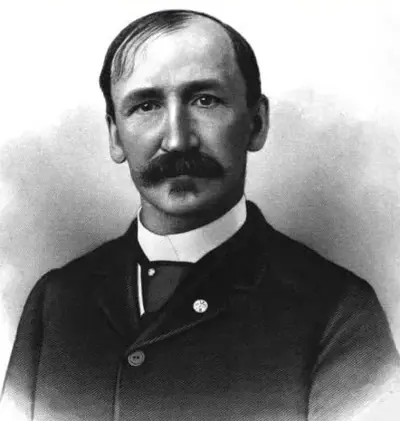
John Buchanan Robinson was an American politician from Pennsylvania who served as a Republican member of the Pennsylvania House of Representatives for Delaware County from 1884 to 1888, the Pennsylvania State Senate for the 9th district from 1889 to 1892 and the U.S. House of Representatives for Pennsylvania's 6th congressional district from 1891 to 1897.
