William McChesney Martin Jr. Quotes
My gracious, here I am the new chairman ... and I haven't the faintest idea of how you control the money supply. Yet everyone thinks I have it at my fingertips.
William McChesney Martin Jr., 1906-*, Chairman, Federal Reserve Board (Republican), Description of his feelings upon becoming chairman Quoted in New York Times, December 10, 1985
Sourced by: Eigen's Political and Historical Quotations


There actually are restraints on how much paper money a government will issue, but unlike with a gold standard where the restraint is external and controlled by how much gold the country can amass. However, with paper money the restraints area all internal. If too much money is printed, the value of the money relative to gold, silver and other nation’s money will go down and imports will become more expensive. Excessive printing of money can easily produce inflation. However, the internal restraints can be overcome by the government’s need to raise money for war, debt or other purposes. So Paul and many other politicians have a deep distrust of paper money not backed by Gold or Silver. In the United States however, the Government does not control the money supply or the printing policies of money. This is under the control of the Federal Reserve Board which while appointed by President’s as terms expire, have a great deal of independence both from the Executive and Legislative Branches. For that reason Paul is even more distrustful when the Federal Reserve decides to print money. See {629491} for his unsuccessful effort to abolish the Federal Reserve Bank.


The ‘Fed’ refers to the Federal Reserve Board, the strength of which lies in its independence from politics. Some, however, believe that there should not be any entity that performs a major function in our society which is not accountable to the Executive Branch or the Congress or both.

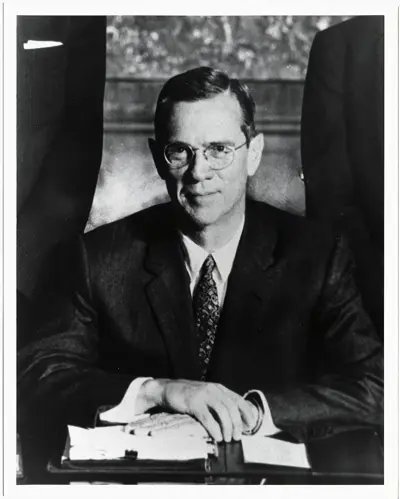
William McChesney Martin Jr. was the ninth and longest-serving Chairman of the United States Federal Reserve Bank, serving from April 2, 1951, to January 31, 1970, under five presidents. Martin, who once considered becoming a Presbyterian minister, was described by a Washington journalist as "the happy Puritan".
