Millicent Fawcett Quotes
Just as radical heirs apparent are said to lay aside all inconvenient revolutionary opinions when they come to the throne, it was believed that Mr. Mill in Parliament would be an entirely different person from Mr. Mill in his study.
Fawcett, Millicent Garrett. "His Influence as a Practical Politician." John Stuart Mill: His Life and Works, J. R. Osgood and Company, 1873, p. 78.

West Saxons had a bad experience with a “Queen” who was not very good. This quotation illustrates that the institutions of monarchy varied from time to time and place to place, just like democracies that have many differences among them.


Roosevelt ascended to the presidency upon the assassination of William McKinley. Later he was elected President in his own right


The Senator had switched parties.

At the time of this quotation, Thompson was campaigning for the Republican Presidential Nomination for which he did not make a good showing in the primaries.


One of the reasons that Reagan was so popular and effective was the he was positive and civil in his public and political relations. Although he was clearly conservative, he worked very well with the Democrats in Congress and in the state. The Republican Party after Reagan had become totally negative and offered nothing positive and specific. Lack of comity and much nastiness had become the Republican legislative style and on Radio and TV the nastiness rivaled that of McCarthyism. Conservatives like Graham who were civil and polite to Democrats and everyone else, were actually castigated and attacked by other Republican leaders and spokespeople.

Cromwell was not opposed to monarchy per se as long as it was reasonably checked. He saw Charles II as a terrible monarch. After deposing Charles, he and his associates had to come up with some form of government. As “Lord Protector” he was a de facto monarch without the trappings.


_0_PostageStamp_47x47.jpg "Chairman of the Joint Chiefs of Staff Navy Adm. Mike Mullen gives an interview to John Dickerson during the CBS news program Face the Nation in Washington, D.C., July 5, 2009. During the interview, Mullen discussed the wars in Iraq and Afghanistan, North Korea's recent missile tests and his recent visit to Russia. (DoD photo by Mass Communication Specialist 1st Class Chad J. McNeeley, U.S. Navy/Released)")


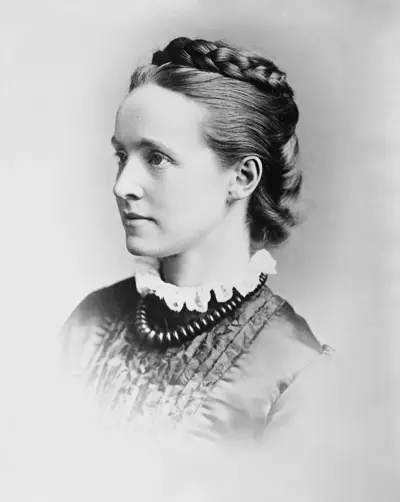
Dame Millicent Garrett Fawcett GBE was an English politician, writer and feminist. She campaigned for women's suffrage through legal change and from 1897 to 1919 led Britain's largest women's rights association, the National Union of Women's Suffrage Societies (NUWSS). She explained, "I cannot say I became a suffragist. I always was one, from the time I was old enough to think at all about the principles of Representative Government." Fawcett tried to broaden women's chances of higher education, serving as a governor of Bedford College, London (now Royal Holloway) and co-founding Newnham College, Cambridge in 1875. In 2018, 100 years after the Representation of the People Act, she became the first woman honoured by a statue in Parliament Square.
