Apollonius of Tyana Quotes
Just as an individual of pre-eminent worth transforms democracy into a monarchy of the best man, even so the rule of one man, if in all things it has an eye to the common welfare, is democracy.
Philostratus. The Life of Apollonius of Tyana, The Epistles of Apollonius and the Treatise of Eusebius. Translated by F. C. Conybeare, vol. 1, William Heinemann, 1912, p. 537.

Many of the early democracies had failed when in crises the citizens turned to a strong leader who soon became a monarch. The early democracies did not have the mature democratic institutions that we now know are so important for the success of a democracy.

The Monarchy was chosen and Darius was monarch. See {612225}


Although friendly to America, Canning was a monarchist and did not share America's enthusiasm for democracy and concern about Spanish Princes in Mexico and Brazil.


There are some who have argued that the United States 20th century of world dominance was an empire. Perhaps so, but it did not have most of the characteristics that Thucydides and most others thought of as characteristics of empire—occupation of nations, rule by the Imperial country, privilege in other nations of the Empire, control. Most important, in historical empires, money—in the form of taxes or goods was commandeered by the Empire for the mother country. The US taxed no one, and money flowed the other way in the most generous sharing of foreign aid in human history. The United States had great influence and was able to exert economic and sometimes military pressure on many nations of the world; American culture was adopted by many nations, but America rarely behaved as Empires historically did.


Actually the Iroquois had a very sophisticated system of regular laws and government some of which was incorporated into our Constitution. However, the Iroquois sided with the British in the American Revolution and at its conclusion, most were driven out of their New York lands and became refugees in British Canada. So by 1816, the Iroquois, the most sophisticated, powerful and affluent of all the American Indian tribes were no longer consequential in America.


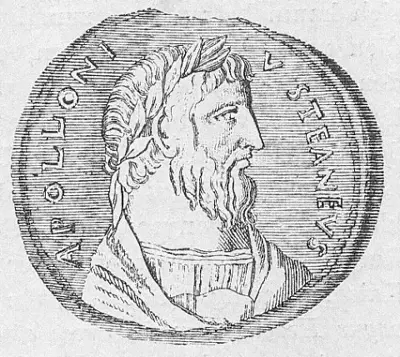
Apollonius of Tyana (Ancient Greek: Ἀπολλώνιος ὁ Τυανεύς; c. 3 BC – c. 97 AD), sometimes also called Apollonios of Tyana, was a Greek Neopythagorean philosopher from the town of Tyana in the Roman province of Cappadocia in Anatolia. He is the subject of Life of Apollonius of Tyana, written by Philostratus over a century after his death.
