Daniel Callahan Quotes
Just 10 percent of the population—mainly the elderly—consumes about 80 percent of health care expenditures, primarily on expensive chronic illnesses and end-of-life costs. Historically, the longer lives that medical advances have given us have run exactly parallel to the increase in chronic illness and the explosion in costs. Can we afford to live longer—much less radically longer?
Daniel Callahan, President, The Hastings Center, Co-Director, Yale-Hastings Program in Ethics & Health Policy, “On Dying After Your Time”, New York Times, December 1, 2013
Sourced by: Eigen's Political and Historical Quotations


The cost of health care had become so great that many people—especially those on fixed incomes were not able to afford the costs. The majority of all bankruptcies in America are caused by a family medical problem.


Sarah Palin, former Republican Governor of Alaska, coined a new term when she charged that proposed Health Care legislation would create a "death panel" See Palin Quotation 644138. It was an absolute lie totally made up by Palin. However a number of conservative members of Congress then repeated the prevarication in Congressional Debate and elsewhere. One poll showed that after it spread, about 85% of respondents were familiar with the charge and of those who were familiar with it, about 30% thought it was true and Palin's new term won the dubius distinction of winning the "Lie of the Year" award. Despite the fact that it was totally false, in order to win Obamacare be a single vote, the President had to eliminate the part of the bill that allowed payment to physicians to take the time and explain to patients and/or their families, the various options of palliative treatment during the last months of life. Many people thought that the doctors would form death panels.


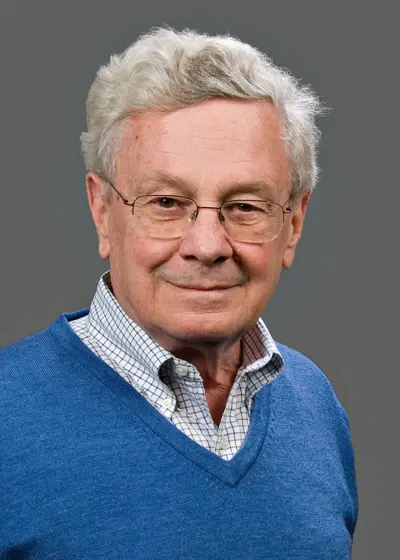
Daniel John Callahan was an American philosopher who played a leading role in developing the field of biomedical ethics as co-founder of The Hastings Center, the world's first bioethics research institute. He served as the Director of The Hastings Center from 1969 to 1983, president from 1984 to 1996, and president emeritus from 1996 to 2019. He was the author or editor of 47 books.
