Benjamin Wittes Quotes
June 10, 2002, the day John Ashcroft announced the arrest of Jose Padilla, marked a low point in Ashcroft's career as Attorney General.
Wittes, Benjamin. Law and the Long War: The Future of Justice in the Age of Terror. Penguin Press, 2008.


Goldsmith headed the Justice Department Office of Legal Counsel—the office that makes legal opinions to guide the Federal Government’s conduct. The George W. Bush White House had decided that the War on Terror required spying on American citizens under certain circumstances but the existing laws required that in each case, they obtain a warrant from a special FISA (Foreign Intelligence Surveillance Act) Court. They were afraid that the court might not grant the warrants in all cases so in some cases ignored the requirements to go through the court. Addington and some other White House staff felt that if there was one more terrorist incident in the United States, they could pressure Congress into getting rid of the FISA court.

See {618460} for the kinds of statements that stimulated this type of political attack.

The American military and CIA officials made a number of errors in dealing with some of the prisoners. Once military desecrated a Muslim Holy Book with urine, many or the active and violent prisoners were kept in solitary confinement, but secrecy allowed Islamic propagandists to claim that this was done with almost all. Worst of all CIA interrogators were allowed to use ‘enhanced techniques’ (torture). Prisoners were not allowed to have reasonable contact to attorneys and where there were, these were monitored. Most of the prisoners were never charged with anything and yet they never received sentences and no one had any idea whether or not they would ever be charged, tried, sentenced or released. Even where there were some prisoners that the American authorities were willing to release, only a few were as their original counties would not accept them. Islamic extremist terrorist recruiters use Guantanamo to propagandize against America, and many new terrorist recruits were primarily motivated they claimed by the way that fellow Muslims had been treated in Guantanamo. Almost all agreed that Guantanamo was a negative, but it became very difficult to close it down and despite all the errors of operation, very few Americans were willing to return all these men to the battlefield to re-jojn the terrorists and other countries were unwilling to take the responsibility for their custody.

The President and Vice President wanted places to interrogate suspected terrorists where they did not have to obey American law, where the press could be kept away from the prisoners, and there would be no way that a prisoner could get the assistance of attorneys and American Judges could not have any jurisdiction. A number of the prisoners had been picked up by mistake, or were accused by people who had scores to settle, and if the CIA had made a mistake, the public could not find out. Further, they wanted to torture certain prisoners and wanted places where they could use their “enhanced interrogation”—see {637536}--without the public finding out.


In the aftermath of 9-11, there was a call for giving the law enforcement agencies more authority and the Patriot Act was passed in haste and fear. Some law enforcement personnel then went about picking up Arab Americans and in many cases holding them incommunicado without any charges. No terrorists were discovered by this process and yet good American citizens were abused, traumatized and insulted. In our zeal to protect American freedom, we actually began to resemble some of the capricious and abusive practices of our undemocratic enemies. There were other abuses allowed under the Patriot Act, but at the time of this writing the extent had not yet been revealed, but the refusal of the authorities to make public the national security benefits suggests that there was not much national security benefit and much abuse.
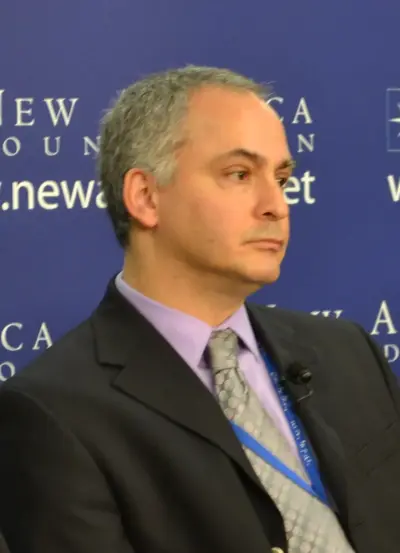
Benjamin Wittes is an American legal journalist and Senior Fellow in Governance Studies at the Brookings Institution, where he is the Research Director in Public Law, and Co-Director of the Harvard Law School–Brookings Project on Law and Security. He works principally on issues related to American law and national security. Along with Robert M. Chesney and Jack Goldsmith, Wittes cofounded the Lawfare Blog. Wittes is also a member of the Hoover Institution's Task Force on National Security and Law. Wittes is a frequent speaker on topics of detention, interrogation, and national security, before academic, government, policy, and military audiences. He also co-hosts the Rational Security podcast.
