Plutarch Quotes
Julius Caesar divorced his wife Pompeia, but declared at the trial that he knew nothing of what was alleged against her and Clodius. When asked why, in that case, he had divorced her, he replied: Because I would have the chastity of my wife clear even of suspicion.
Plutarch. Plutarch's Lives. Translated by John Dryden, edited by Arthur Hugh Clough, vol. 4, Little, Brown, and Company, 1859, p. 265.


Caesar's wife, Pompeia was rumored to have had an affair. Caesar started divorce proceedings, but in the trial he admitted that he had no evidence whatsoever of her alleged infidelities. He was then asked why he wanted to divorce her:


This is generally true in politics.


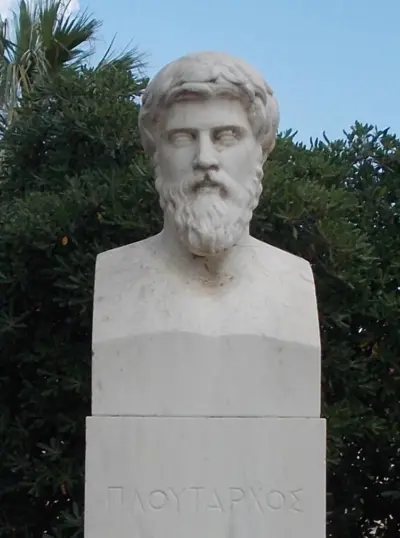
Plutarch (/ˈpluːtɑːrk/; Greek: Πλούταρχος, Ploútarchos; Koine Greek: [ˈplutarkʰos]; AD 46–after AD 119) was a Greek Middle Platonist philosopher, historian, biographer, essayist, and priest at the Temple of Apollo. He is known primarily for his Parallel Lives, a series of biographies of illustrious Greeks and Romans, and Moralia, a collection of essays and speeches. Upon becoming a Roman citizen, he was named Lucius Mestrius Plutarchus (Λούκιος Μέστριος Πλούταρχος).
