Seamus Heaney Quotes
I've nothing against the Queen personally. I had lunch at the Palace once upon a time.
Heaney, Seamus, and Dennis O'Driscoll. Stepping Stones: Interviews with Seamus Heaney. Farrar, Straus and Giroux, 2008.


The king's son, Prince Albert had dropped some papers and was instructed by the king to pick them up himself rather than allow the servants to do it.

Prior to Cooke’s indictment of English King Charles I, there was a concept of Royal Impunity—that a sovereign could not legally be called to account for his actions as ruler of the state. The concept of “sovereign immunity” was a concept where the sovereign and his agents could be given immunity for specific actions, but they never would have impunity again where there were no limits to the crimes they might commit against their own people. Charles I refused to even recognize Cooke’s indictment and so have heads of state called to account for their major crimes since then all the way down to Saddam Hussein in 2006 who made the same argument. Cooke was himself hanged, drawn and quartered almost 20 years after the Charles I trial for his part in the “Regicide” so the concept of Royal Impunity did not die quickly.

The Queen assented but warned that members of the Royal Family should stay away from Party Politics.
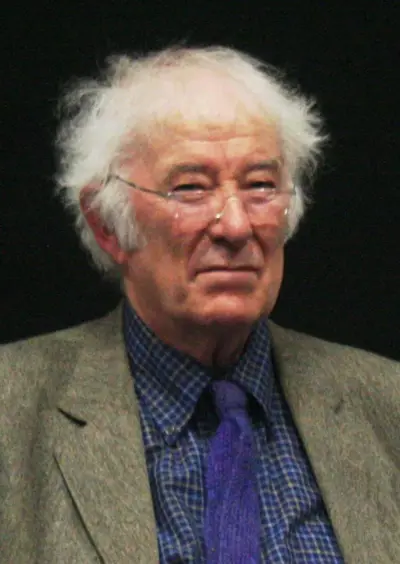
Seamus Justin Heaney MRIA was an Irish poet, playwright and translator. He received the 1995 Nobel Prize in Literature. Among his best-known works is Death of a Naturalist (1966), his first major published volume. Heaney was and is still recognised as one of the principal contributors to poetry in Ireland during his lifetime. American poet Robert Lowell described him as "the most important Irish poet since Yeats", and many others, including the academic John Sutherland, have said that he was "the greatest poet of our age". Robert Pinsky has stated that "with his wonderful gift of eye and ear Heaney has the gift of the story-teller." Upon his death in 2013, The Independent described him as "probably the best-known poet in the world".
