Roy Lichtenstein Quotes
I've never done an anguished painting.
Kimmelman, Michael. Portraits: Talking with Artists at the Met, the Modern, the Louvre, and Elsewhere. Random House, 1998, p. 88.


In the 18th Century, the Islamic Barbary States combined their religious beliefs for Jihad against non believers with a classic criminal enterprise. They would authorize cosairs to outfit ships and attack Christian merchant ships on the high seas. They would capture the ship and the cargo, which would be split with the ruler of the country. The crew and passengers would by “rented out” as slaves until they would be ransomed, the proceeds of which would also be shared. To motivate a larger ransom, the captives were regularly tortured as well as worked almost to death. The Barbary Pirates encouraged the “slaves” to write to their relatives, friends and governments to try and raise the ransom. O’Brien’s ship was captured in 1785. He had been a slave for 4 years when he wrote this. See for a quote from a letter he sent Congress. Finally, after 10 years, O’Brien and those of his crew that were still alive were finally freed. O’Brien’s unusual experience and knowledge of the Barbary States qualified him as an expert and he was then appointed Consul-General to Algiers. Individual Christian countries were offered a “treaty” whereby for an annual payment of tribute to the Barbary country, the corsairs of that country would not attack ships flying their flag. The Christian country had to make 4 different tribute payments to each of the Barbary nations. Most of the European powers were paying the tribute even though some could easily defeat the Corsair navies in a war. The cost of outfitting a fleet for war was much more costly than paying the tribute. The new nation of the United States was good pickings for the Barbary pilots and there was a period of several decades where the Americans had to create a policy to pay tribute or go to war. At different times America did both.


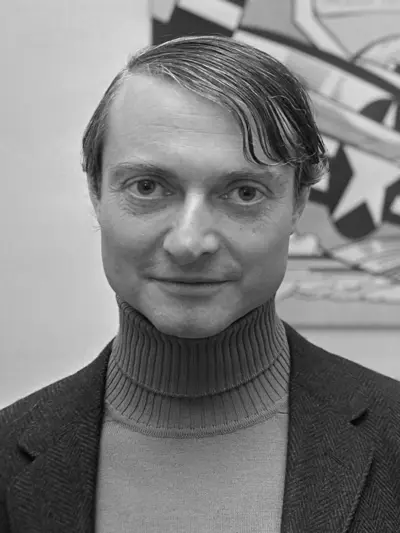
Roy Fox Lichtenstein was an American pop artist. During the 1960s, along with Andy Warhol, Jasper Johns, and James Rosenquist among others, he became a leading figure in the new art movement. His work defined the premise of pop art through parody. Inspired by the comic strip, Lichtenstein produced precise compositions that documented while they parodied, often in a tongue-in-cheek manner. His work was influenced by popular advertising and the comic book style. His artwork was considered to be "disruptive". He described pop art as "not 'American' painting but actually industrial painting". His paintings were exhibited at the Leo Castelli Gallery in New York City.
