William Bennett Quotes
It's like being criticized by liberals. You wake up the next morning and you get over it.
Bennett, a staunch conservative, came under critical fire from the right for his position on gun control. He was asked what it was like being criticized by fellow conservatives:
William Bennett, Director, Office of National Drug Control Policy, U. S. Secretary of Education (Republican), Interview, CNN Larry King Show, June 15, 1989
Sourced by: Eigen's Political and Historical Quotations


What if you are a conservative in a liberal environment? Then what you are conserving is liberalism.
His reference was to his experience as an undergraduate at Dartmouth, which he and associates views as a liberal organization, while others viewed it as a conservative bastion of the establishment.


So far as he was concerned, Republican moderates—his own party members—were liberals. Anyone who did not support the extreme Conservative agenda, was an enemy and a liberal. He and the Tea Party drove almost all the moderate Republicans out of the party.


Actually, there have been “paranoid” fear of opposition political viewpoints in America very often. In the early days of the Republic, the Federalists main concern was not England or other foreign enemies, but Jefferson’s Democratic Republicans. And those Jeffersonians were absolutely convinced that the greatest danger to America was the Federalists who would bring back a monarchy if they could. The Jacksonians triggered a similar polarization. The Civil War stemmed from this extreme. Even America’s most popular President, Franklin Delano Roosevelt, who was elected to 4 successive terms, was perceived as the major “enemy” of America along with his wife Eleanor and the other New Dealers.


Describing the Catholic Bishops of the United States:


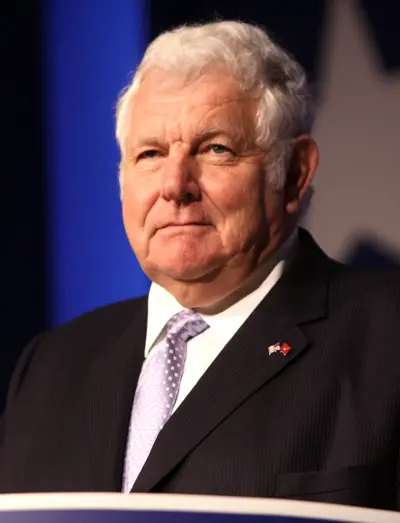
William John Bennett is an American conservative pundit, politician, and political theorist, who served as Secretary of Education from 1985 to 1988 under President Ronald Reagan. He also held the post of Director of the Office of National Drug Control Policy under George H. W. Bush.
