Michael Gerson Quotes
It's hard when the worst people in the country are cheering, the people with the confederate flag, the people that do anti-Semitism on Twitter, that's difficult for a lot of people in this country. But, you know, I do think an inaugural, for example, is almost always an act of national healing.
Gerson, Michael. PBS NewsHour, Public Broadcasting Service, 11 Nov. 2016.


Gerald Ford, who had never run nationally for office, succeeded to the presidency upon the resignation of Richard Nixon. While generally competent and extremely gracious, in the wake of Watergate he lost his only presidential election contest to Jimmy Carter in 1976:

After Roosevelt, most eras of American politics more or less followed the pattern Roosevelt described herein as a “calamity”, with the anger becoming more or less intense. Jefferson thought that these were natural divisions of politics in all societies--{604810}. The thing that masked this for years was race and slavery. In Lincoln’s time there were liberals and conservatives in both parties if race were ignored. In Theodore Roosevelt’s era, he, Taft and others were generally liberal reformers, while a large number of Republicans were conservative supporters of the status quo. Some democrats were radical reformers like William Jennings Bryan while others were arch conservatives. Until 1964 and the Civil Rights Act there were many conservatives in the Democratic Party, but almost all switched to the Republican Party in anger. The Republican conservatives tended to drive the Republican liberals out of the party and for the last part of the 20th century Roosevelt’s “calamity” well described the American political scene, and the anger increased carrying partisan bitterness into the 21st century.


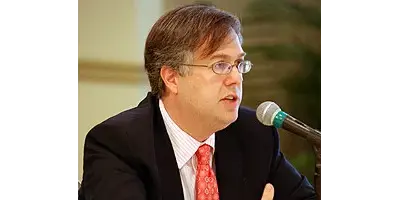
Michael John Gerson is an op-ed columnist for The Washington Post, a Policy Fellow with One Campaign, a visiting fellow with the Center for Public Justice, and a former senior fellow at the Council on Foreign Relations. He served as President George W. Bush's chief speechwriter from 2001 until June 2006, as a senior policy advisor from 2000 through June 2006, and was a member of the White House Iraq Group.
