Jim Leach Quotes
I am appalled by the notion of cultural wars.
Pogrebin, Robin. "New Humanities Chief Speaks of Civility." The New York Times, 3 Nov. 2009, p. C1.


There had just been a terrorist bombing in New York City and a suspect had been arrested. The suspect was a naturalized American citizen who had immigrated from Afghanistan. One of the then presidential candidates, Donald Trump, took to the airways and the internet to use the incident to support his view of prohibiting Muslim Immigrants and visitors entry into the United States. The governor was asked if it was appropriate for a presidential candidate to politicize the event.


What if you are a conservative in a liberal environment? Then what you are conserving is liberalism.
His reference was to his experience as an undergraduate at Dartmouth, which he and associates views as a liberal organization, while others viewed it as a conservative bastion of the establishment.


This was his most famous speech.

In the Early 21st Century, the vast majority of the entertainment industry were supporters of the Democratic party. This has generally been true throughout history where entertainers have been on the left politically except in left leaning dictatorships like China and the Soviet Union where those governments tend to see entertainers as reactionaries. In general entertainers talk, sing, and dramatize about and criticize the status quo.


After Roosevelt, most eras of American politics more or less followed the pattern Roosevelt described herein as a “calamity”, with the anger becoming more or less intense. Jefferson thought that these were natural divisions of politics in all societies--{604810}. The thing that masked this for years was race and slavery. In Lincoln’s time there were liberals and conservatives in both parties if race were ignored. In Theodore Roosevelt’s era, he, Taft and others were generally liberal reformers, while a large number of Republicans were conservative supporters of the status quo. Some democrats were radical reformers like William Jennings Bryan while others were arch conservatives. Until 1964 and the Civil Rights Act there were many conservatives in the Democratic Party, but almost all switched to the Republican Party in anger. The Republican conservatives tended to drive the Republican liberals out of the party and for the last part of the 20th century Roosevelt’s “calamity” well described the American political scene, and the anger increased carrying partisan bitterness into the 21st century.


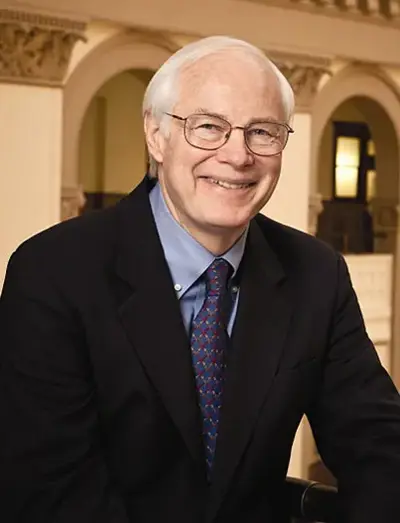
James Albert Smith Leach is an American academic and former politician. He served as ninth Chair of the National Endowment for the Humanities from 2009 to 2013 and was a member of the U.S. House of Representatives from Iowa (1977–2007).
