Judith Butler Quotes
It will not do to say that international law is the enemy of the Jewish people, since the Jewish people surely did not as a whole oppose the Nuremburg trials, or the development of human rights law.
Butler, Judith. Precarious Life: The Powers of Mourning and Violence. Verso, 2004.

Adolf Eichmann was a German Nazi war criminal who had been responsible for the murder of millions of people. At the end of WWII, he had escaped Germany and was living in South America. Israeli agents found him, kidnapped him, and brought him to Israel. There he received a very public trial, was found guilt, and executed. In the War on Terror at the beginning of the 21st century, the key terrorists that were captured in Afghanistan were sent to a special prison base in the American part of Cuba. They were held there but at first received no trials or hearings. They were not prisoners of war, and not criminals where there were legal procedures for handling them. This was a new area. Some argued that they should all get trials. The Supreme court ruled that they at least had to get hearings. The correct handling was a major debate.


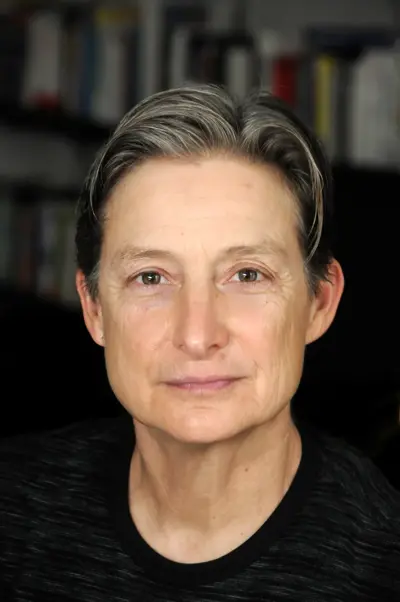
Judith Pamela Butler is an American philosopher and gender theorist whose work has influenced political philosophy, ethics, and the fields of third-wave feminist, queer, and literary theory. In 1993, Butler began teaching at the University of California, Berkeley, where they have served, beginning in 1998, as the Maxine Elliot Professor in the Department of Comparative Literature and the Program of Critical Theory. They are also the Hannah Arendt Chair at the European Graduate School.
